
Climbing, mountain biking reveal a different side of famed mountain.
By Haven Lindsey
Many people think of Taos Ski Valley as a winter-only playground. Powder days, chairlifts and après-ski come to mind long before summer adventures. But once the snow melts, the mountain reveals an entirely different personality filled with cliffside climbs, quiet forest trails and a few surprises that many locals haven’t yet discovered.
It starts with two words: “via ferrata.”
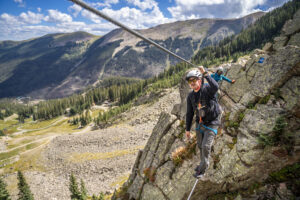
Via ferrata, Italian for “iron way,” refers to climbing routes constructed of steel cables, metal rungs and suspension bridges permanently fixed into rock. These routes originated in the Italian Dolomites during World War I and have long been popular throughout Europe. In the United States, they remain relatively rare, making TSV’s route particularly notable: it ranks among the few routes in the southern Rockies and among the highest in North America.
The routes combine rock climbing and high-mountain hiking, letting beginners safely experience the thrill of moving across steep alpine cliffs while experts find plenty to challenge themselves. Nicole Ponte, a via ferrata guide, calls it a “challenge by choice.” Climbers of all abilities tackle the route at their own pace.
My climbing partner, Greyson, uses advanced techniques while I — a mere beginner whose climbing résumé tops out at ladders and hiking trails — move carefully from rung to rung. Yet we climb together and both experience a sense of accomplishment.
The adrenaline feels real. Step by step, I learn to trust the equipment, from grippy climbing shoes to carabiners and elasticized lanyards that act like shock absorbers. Standing on suspension bridges high above the valley delivers a mix of nerves and awe I hadn’t anticipated. Having skied these slopes before, I see the landscape in a new way — literally at my fingertips and beneath newly learned toeholds.
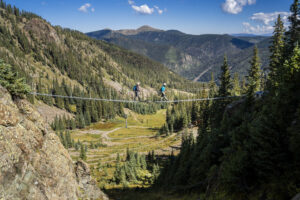
Most people travel out of state, or even out of the country, to try a via ferrata. In Taos, the adventure sits just a short drive up the mountain. A celebratory lunch (don’t skip the pretzel appetizer) at The Bavarian afterward marks the perfect conclusion to a morning of climbing.
But still the mountain offers more: mountain biking. While many riders head to nearby Angel Fire, TSV quietly offers green, blue and black trails. We start in the ski valley’s free skills park, testing our balance and technique on teeter-totters, elevated tracks and small jumps before heading out on full-suspension bikes, padded helmets in place.
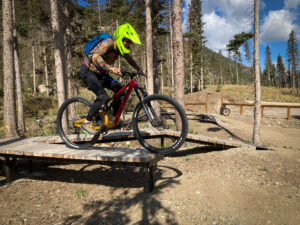
Our guide, James Holmes, helps us warm up before we load our bikes onto the chairlift. Riding a bike where I normally ski feels unexpectedly mischievous. We zigzag through spruce and aspen, lean into berms, feel gravity’s pull and take in the stunning scenery. TSV’s one-way trail system allows us to gather speed and play without worrying about riders coming from the opposite direction. This rare yet intentional luxury makes the rides feel even more liberating.
After a morning of biking, we slow the pace with lunch in the village courtyard, as local legend Jimmy Stadler performs. Later, a massage at the Spa & Wellness Center at The Blake and a dip in the heated pool offer a perfect reset after two days of adventure.
Travelers can also end the day with dinner at 192 at The Blake, where new executive chef Claudio Cavalleri serves a thoughtfully curated menu in the hotel’s open-kitchen restaurant.
Whether you’re a local or a visitor, summertime in the ski valley offers the opportunity to experience a familiar place with fresh eyes and discover that the adventure doesn’t end when winter does. In many ways, it’s just beginning.
For information on pricing and hours for the via ferrata, mountain bike rentals, spa, live music schedules and more, visit skitaos.com.