
Where history lives, breathes — and welcomes you in
By Ellen Miller-goins
There are place in Northern New Mexico where history is preserved. And then there is Ranchos de Taos — where history is still alive.
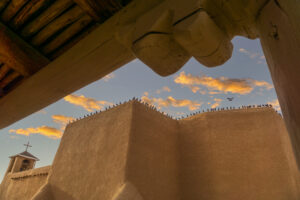
Begin, as generations have, at the heart of it all: the San Francisco de Asís Mission Church. Rising from the earth in soft, sculpted curves of adobe, the church feels less constructed than grown — an organic form shaped by human hands and time itself. Built between 1772 and 1816, it remains one of the finest examples of Spanish Colonial architecture in the United States.
Stand quietly behind the church in the late afternoon light and you begin to understand why artists like Georgia O’Keeffe and Ansel Adams returned to it again and again. The famous rear view, with its rounded, beehive buttresses, captures something elemental: light, shadow, earth and spirit in perfect balance.
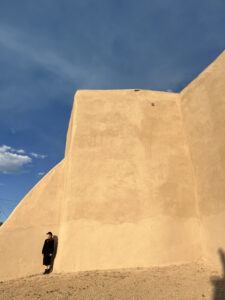
The church is not a relic. It is still the center of daily life here. Parishioners gather for Mass, volunteers re-mud the adobe each summer, and visitors are welcomed into a space that has never stopped being what it was built to be.

Just steps from the church, the story of Ranchos unfolds. Step inside Chimayo Trading del Norte, a place often described as a museum where everything is for sale.
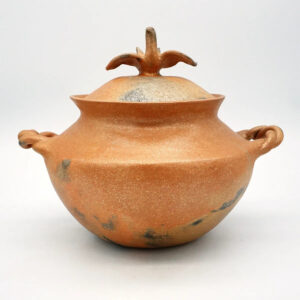
Housed in nearly 300-year-old adobe buildings on the north side of the plaza, Chimayo Trading is more than a gallery. It is a living continuation of Northern New Mexico’s artistic traditions, representing Native, Hispanic and Anglo art forms, from historic masters of the Taos Society of Artists to today’s leading contemporary voices.

Owner Gabriel Abrums describes Ranchos as something increasingly rare: “the last real holdout of old New Mexico …. a real plaza where people live, work and go to church.”
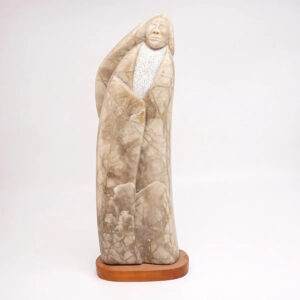
That authenticity is palpable the moment you walk through the doors. Hand-hewn vigas stretch overhead. Floorboards, patched with tin, creak softly underfoot. Light filters across pottery, weavings, jewelry and paintings — some contemporary, others centuries old.
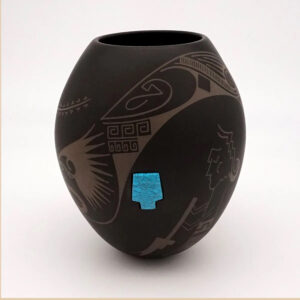
For Abrums, the setting is inseparable from the art itself. “The character of the buildings …lends itself to displaying the art the way it’s supposed to be seen,” he says. Here, the connection between past and present is not curated — it’s continuous.
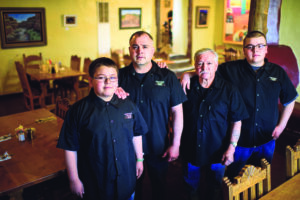
Across from the church, the scent of red chile draws you into another Ranchos institution: Ranchos Plaza Grill. For decades, the Medina family has served what many locals consider the gold standard of Northern New Mexican cuisine: simple, honest food rooted in generations of tradition. Dishes are prepared the way they always have been, allowing the ingredients — especially the chile — to speak for themselves.
“It offers the best traditional New Mexican food in Northern New Mexico,” Abrums says. “And I tell that to everybody that walks in the door.” The setting is as memorable as the food. Thick adobe walls, low doorways, and rooms filled with folk art create a sense of warmth and continuity.
From there, Ranchos invites you to wander.
Across the road, RB Ravens Gallery offers a deep dive into Native American and Southwest art. Nearby, Ranchos Antique Furnishings feels like stepping into another era entirely. Just down the highway, Vargas Tile Company show- cases vibrant handcrafted tile, while a few miles farther, Taos Drums carries forward a centuries-old tradition of drum making.
Make a day of it.
Start your morning at Ranchos Plaza Grill, where traditional Northern New Mexican breakfast — think huevos rancheros or a smothered breakfast burrito — sets the tone for a day rooted in flavor and family tradition. For lunch, stop at Trading Post Market for a relaxed meal before continuing your exploration of the plaza.
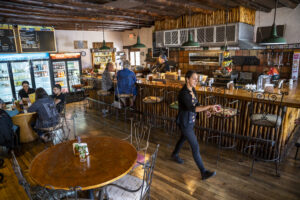
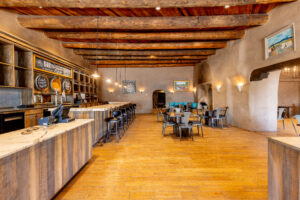
At day’s end, head to Old Martinez Hall. A beloved community gathering place for generations, this historic adobe landmark is reopening for summer 2026 as a lively community gathering space. Now operated by Heritage Hotels & Resorts and led by executive chef Cristina Martinez, the hall will feature a casual New Mexican menu, a full bar and regular live music, including Sunday afternoon performances (2–5 p.m.). Designed to be family-friendly, the venue will also host weddings, private events and celebrations, continuing its long tradition as a place where generations of Taoseños have gathered for music, food and community.
Bed down at Desert Flower Boutique Hotel, LUXX Lodge Glamping & RV Park (both featured elsewhere in this publication), Adobe & Pines Inn/ Hotel Bed and Breakfast or the new vacation rental at Chimayo Trading del Norte.
Ranchos de Taos is not polished. It is not manufactured. It is art that blooms from tradition, food that comes from family, and a church that still anchors it all.