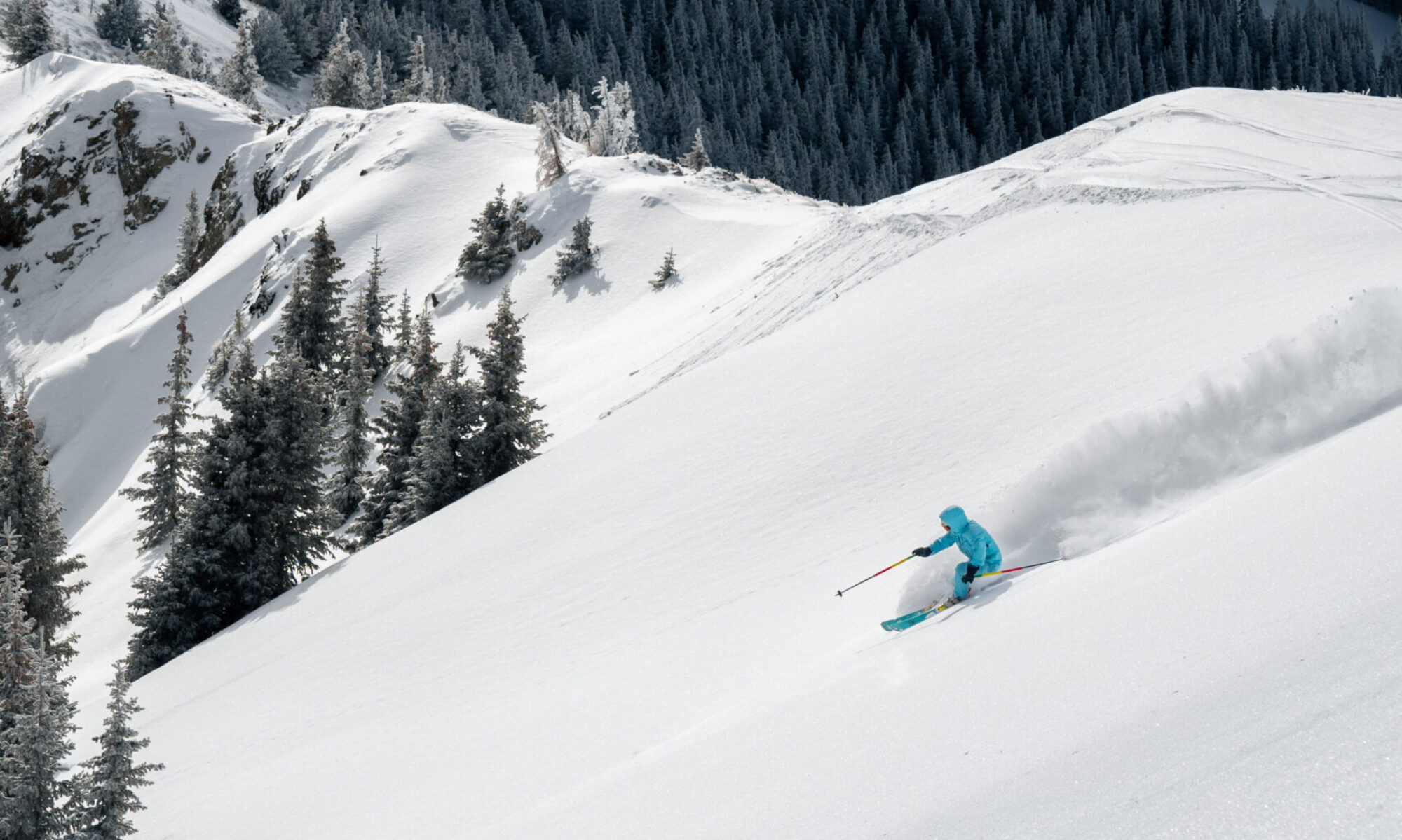

Andrea Krejci

Finding freedom on the mountain

by Ellen Miller-Goins

When Andrea Krejci talks about skiing, her voice carries the kind of reverence most people reserve for lifelong passions. The Swedish immigrant is animated, friendly and full of joy when talking about her chosen sport — and profession

“I think I started skiing at 2 years old,” she says. “My parents were skiers before me and my brother were born, and then they put us in a ski racing program, on a ski team — I think I was probably about 7 years old. And so that introduced me, of course, to the competitive aspect of skiing. But, I think for my brother as well, who is still also in the ski industry, it must have made such a profound effect on us both, because that was our family connection.”
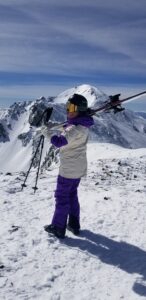
That deep connection guided Krejci across continents, careers, and disciplines — from the slopes of Stockholm to New Mexico, from alpine racing to freeride coaching. Today, she is one of the few female freeride head coaches in North America, shaping the next generation of skiers through the Taos Winter Sports Team (TWST).

Krejci grew up in Sweden’s capital, but her heart was in the mountains. Skiing with her family each year became a ritual that turned into competitive racing and, ultimately, a life’s path. She came to the United States in 1993 to ski for the University of New Mexico, drawn not only by the team but by the climate.

“I specifically chose New Mexico because I needed sun. I was tired of the cold winters, and I thought, Oh, that’s great that there’s skiing in New Mexico, where there’s so much sunshine.”

She earned her MBA at UNM’s Anderson School of Management but, instead of launching into a conventional business career, decided to spend “just one season” skiing in Taos. “I tried to live in L.A. for one summer — I lasted four months,” she laughs. “It was just too big. I guess I wasn’t done with Taos.”

Discovering Freeride

When Krejci arrived fulltime at Taos Ski Valley in 1999, freeride — also called extreme skiing or big mountain — was still a fledgling sport. Unlike racing, with its regimented gates and timed runs, freeriding is all about creativity and flow. Freeride challenges athletes to carve their own line down steep, ungroomed terrain. Style, fluidity, technique and control matter just as much as speed. Natural features — cliffs, chutes, and rock bands — become opportunities for airs and tricks. Krejci’s introduction came through a friend, Erica Cobb, who invited her to a competition in California.

“I had never heard of an Extreme Skiing Competition, so when Erica described to me what this ski competition was all about, I was like,,wow — it’s just skiing down a mountain and finding fun things to do along the way? Awesome! I can do that! I felt like this is what I had been searching for my whole life. Growing up, I loved competing in ski racing, but I was never the fastest. What I missed was the free-skiing aspect,” she says.
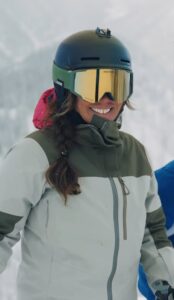
She remembers chasing adventure even as a young skier. “We used to go to the Alps every year with my family for ski vacations. I remember building kickers at La Plagne, France with the boys and hitting those, and hiking up a peak in Val d’Isere for “off-piste” skiing. Growing up, of course, there was no such thing as extreme skiing competition. Her first competition in Kirkwood, California, sealed it. “What freeride is all about is the community of riders. The camaraderie that comes with it, which I didn’t find in ski racing. Ski racing is more like the individual versus everybody else. In Freeride you’re all cheering for each other. You support each other to the max.”

Krejci began coaching alpine racing soon after moving to Taos, but a spur-of-the-moment trip with one of TWST’s ski racers to a junior freeride event in Snowbird, Utah, planted the seed for something bigger. Supported by then program director Sean Cassily, and inspired by the enthusiasm of her athletes — and the mountain itself — she launched TWST’s freeride program in 2011.

“We had kids join right away, and we started with maybe 14 kids,” she recalls. “Those early days, I will never forget, because we were going so hard and I was still competing myself so it was a great motivation. We had kids that would show up at 8:45 and we wouldn’t stop skiing until 4:05 because the lift had closed. We just couldn’t get enough.”
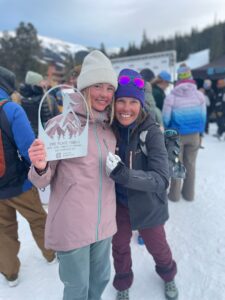
The program grew quickly, eventually reaching about 45 athletes and a team of six or seven coaches. It also produced standout skiers such as Emma Patterson, who has gone on to compete in the Freeride World Tour.

Though freeride looks like fearless improvisation, Krejci emphasizes structure and progression. Early in the season, athletes focus on technical drills and learning jumps and other maneuvers in the relative safety of the terrain park or small natural features. As chutes and other terrain opens, the focus shifts to creativity and line choice. “We’re not going to have a kid ski or jump off something that they’re not ready for, so we always start small. It’s all about progression,” she explains.

At Taos, that progression can start early. “Now we (TWST) hike 7-year-olds up the ridge,” Krejci says, describing the way even the youngest athletes are introduced to Taos Ski Valley’s iconic extreme-skiing terrain. “They start incredibly young, and that foundation builds a confidence that carries them through the rest of their skiing.” At TWST, an athlete can join the Freeride team once they turn 10. Before that, the athlete will go through the Devo and/ or Gateway programs, and then make their choice of where they want to put their focus. Ski Racing, competitive Snowboard or Freeride.

Safety and avalanche awareness are woven into training. “We do work with the Taos Ski Patrol and the Taos Avalanche Center, and they come and do avalanche presentations for us — both in a classroom setting — and then we go out and practice on the mountain. All of that is part of our curriculum.”
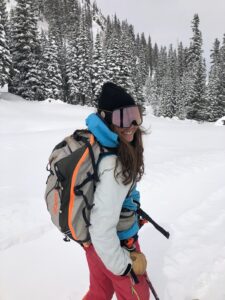
But beyond podiums and championships, Krejci measures success in personal growth. “When I see an athlete overcome a fear that they might have — like, ‘Oh no, I can’t jump’ — and then they start jumping, even if it’s just a little bump and they leave the ground, that could be a huge success for somebody. So it’s very individual. And that, I think, is what keeps us going as coaches. We see success every day.”

Beyond the Slopes

Like many who carve out a life in mountain towns, Krejci has worn many hats: raft guide, real estate broker, coach. She believes the variety has shaped her resilience. “It makes you be prepared for anything,” she says. “Like within rafting, you never know when you’re gonna bump into a rock and somebody’s gonna fall out or a wave is gonna knock you over. Coaching, too. You never know what’s gonna happen out there. Real estate, you never know what’s gonna get thrown your way.”
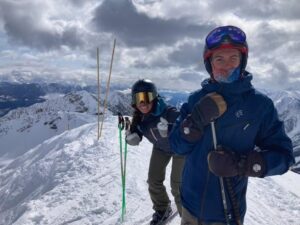
These days she splits her time between Taos, coaching and selling real estate, and Santa Fe where she’s dabbling in real estate as well, and where her life partner Brian Freshman operates Freshie’s Juices on the Santa Fe plaza.

Krejci is keenly aware of her role as a trailblazer in what has long been a male-dominated sport. Her advice for young women? “Don’t let it stop you if there’s only boys, or if you’re only one of a few girls. Latch on to the boys. That’s what I did. You can do anything they can, and they’ll be in awe!”

She also points to initiatives like Rippin’ Ladies, a grassroots program building community among freeride girls and women across the country. “What’s happening now within the freeride community and especially the girls is spectacular,” she says. “The young girls right now are just as good as the boys. It’s amazing! They’re pushing each other.”
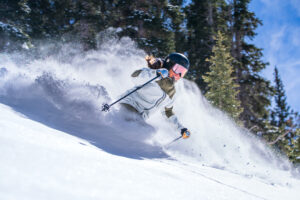
Looking back on her decades in Taos, Krejci is grateful for the journey. “Just go after what you like to do,” she says simply. That philosophy carried her from a 7-year-old racer in Sweden to one of the leading freeride coaches in North America — and helped shape a thriving community of athletes who share her passion for the mountains.

For Krejci, life is less about standing still than carving a fresh line through whatever terrain lies ahead. “Taos is such a good mountain. The mountain just lends itself to freeride.”

TWST Freeride at a Glance

  • Founded: 2011, by Andrea Krejci
  • Athletes: 45 skiers, ages 10 to 18
  • Coaches: 6–7 dedicated staff members
  • Season: Weekends from late November through early April, plus holiday camps
  • Focus: Technical drills, freeride progression, avalanche awareness, and competition prep
  • Notable Alumni: Emma Patterson, Freeride World Tour competitor, professional skier for Salomon.

Pizza to parallel

Lessons from the nation’s top ski school

By Blynn Beltran

In November, a USA Today 10Best reader’s choice contest named the Ernie Blake Snowsports School at Taos Ski Valley the best place to learn how to ski and snowboard. The article mentioned its full- and half-day lessons, themed ski weeks and childcare options for “adults who want to take a lesson without any little ones.”

BLYNN BELTRAN/Taos News
Ernie Blake Snowsports veteran instructor Orlando Torres at the start of his lesson at the base of Taos Ski Valley. Torres has been an instructor for the school since 2008.

But the recognition stopped short of explaining why this school stands above the rest. To find out, I — someone who had never skied or snowboarded — signed up for a three-day lesson and experienced the program first-hand.

Like Riding a Bike?

Before your first lesson, gear is essential: a weatherproof jacket, snow pants, wool socks, goggles, gloves, sunscreen and, most importantly, a helmet. Don’t be like me — I forgot mine. With the added chill of higher elevations, I would also recommend a thermal base layer to stay warm.

Skeptical and nervous, I went in assuming skiing would be both dangerous and difficult. One of those fears, I soon learned, was justified.

Day one started with rentals at Taos Sports, where boots and skis are fitted free of charge. (Tip: if you keep your boots overnight, store them near (but not on) a heat source so they don’t shrink and torture your ankles. If you forget, the techs will happily swap them out.)

BLYNN BELTRAN/Taos News
The start of the Ernie Blake Snowsports School’s lesson at the base of Lift 1.

I met my instructor, Orlando Torres, at the first lift along with four classmates. A Taos native who has taught here nearly two decades, Torres knows the mountain inside and out. He has worked with everyone from kids to adults, tailoring lessons to everyone’s skill level. Along with ski basics, he also wove in the history of the resort, which began in the 1950s when World War II veteran Ernie Blake transformed an old gold mine into a ski destination.

That first day focused on fundamentals: moving our feet, learning the lifts, and mastering the “pizza” wedge — the most basic way to stop on skis. My body wasn’t used to the techniques, and I fell four times. By evening, I debated quitting. But Torres encouraged us to give ourselves credit — these movements were foreign, and progress would come turn by turn. His words motivated me to come back determined to improve.

Learning the Basics

On day two, Torres pointed out a skier speeding recklessly down the bunny slope before plowing into a snowbank. Nobody was hurt, but he used it as a teachable moment: if the man had taken lessons, he wouldn’t have endangered himself or others.

BLYNN BELTRAN/Taos News
The end of the second zipper lift

In our class, Amanda Deng, a 25-year-old product manager from New York, made noticeable progress.

“I definitely improved way more than I thought I would,” Deng said. “I took a two-day lesson and started as a novice. Now I feel confident skiing the green trails and keeping up with my friends.”

Her boyfriend, Chris Hoang, a PhD student and experienced snowboarder, was equally impressed. “She’s a lot better,” he said. “Before, she didn’t have much control. Now she knows how to slow down, keep the wedge and stay in control. She’s ready for the greens.”

Pizza to Parallel

By Monday morning, I could turn left and right, stop on command and make subtle adjustments for smoother runs. Torres decided we were ready for White Feather, a beginner/intermediate trail.

BLYNN BELTRAN/Taos News
Ernie Blake School instructor Orlando Torres during a lesson near the end of the second zipper lift at the Taos Ski Valley

Riding Lift 1 felt like facing the final boss of a video game. I’m afraid of heights, and the cliffs below unnerved me. I even crashed after unloading. But once I focused, everything came together. My skis obeyed, my turns felt deliberate, and my fear began to fade.

By the time I reached the bottom, Torres and my classmate couldn’t believe my progress — and neither could I. In three days, I had gone from reluctant novice to eager beginner, conquering falls, fear and self-doubt along the way.

Behind the Scenes

After my lesson, I spoke with Burt Skall, director of the Ernie Blake Snowsports School. A Taos resident for more than a decade, Skall has been teaching skiing since 1977.

“As far as training goes, we have a very extensive program,” Skall said. “We’ve brought in Olympic gold medalist Deb Armstrong to work with our staff, and our technical director Alain Veth — who used to be a technician for World Cup racers — teaches biomechanics and movement analysis. It’s not only about ski skills but also understanding how bodies move.”

LYNN BELTRAN/Taos News
The heart of the Taos Ski Valley as seen in front of Taos Sports.

Equally important are communication skills. “Nobody wants to feel like they’re asking a stupid question,” Skall said. “But once students get past that fear, they see we’re welcoming and focused on getting them moving with confidence.”

Torres agreed. “I love watching people make their first turn — it’s liberating,” he said. “I get as much joy from seeing that as I do from skiing my favorite powder run. Sharing that excitement with students is the best part.”

Takeaway

By the end of my three days, I realized what makes the Ernie Blake Snowsports School exceptional. It’s not just the technical training or decades of experience — it’s the patience, encouragement and genuine passion of the instructors.

BLYNN BELTRAN/Taos News
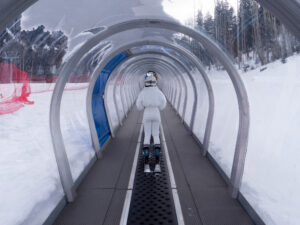
Inside the beginner zipper lift in cased glass. The enclosure is designed to keep the snow off the lift and creates a greenhouse effect to keep the people inside warmer.

Taos Ski Valley worked its magic on me, and I can’t wait to return to the mountains.

For more information, visit skitaos.com/snowsports-lessons.

Beyond the Slopes

11 Unforgettable Winter Adventures in Northern New Mexico

By Haven Lindsey

Taos may be best known for its world-class downhill skiing, but there’s a whole world of winter fun beyond the slopes. From serene snowshoe treks to the thrill of snowmobiling, ice skating, and even ski biking, the region offers countless ways to embrace the season.

Whether you’re chasing adrenaline or searching for quiet moments in nature, here are 11 adventures that showcase Northern New Mexico’s winter magic.

1. Cross-country ski through groomed and open trails | Locations: Red River, Angel Fire

For those who love the rhythm of gliding through snow-covered landscapes, cross-country skiing is a perfect way to explore Northern New Mexico’s winter scenery at a more relaxed pace. For the more adventurous, myriad trails wind through the Carson National Forest, offering sweeping views of mountains, forests, and quiet valleys.

2. Snowshoe through quiet forest trails | Location: Taos, Taos Ski Valley, Eagle Nest

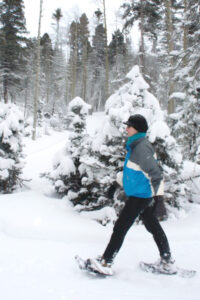
Strap on snowshoes and explore the tranquil beauty of the Carson National Forest. Trails like Gavilan, Italianos, and Yerba Canyon near Taos Ski Valley, Columbine Canyon between Questa and Red River and Amole Canyon near Taos offer serene winter landscapes perfect for a peaceful hike.

3. Glide across the ice | Taos Ski Valley & Town of Taos

Lace up your skates at the Eis Haus rink in Taos Ski Valley, where mountain views and cozy fireplaces set the scene. In town, the Taos Youth and Family Center rink is reopening after major repairs, offering public skate sessions, hockey, and figure skating. Both rinks are local favorites, where families and visitors alike can enjoy crisp winter air and smooth ice.

4. Revel in snow tubing & sledding fun | Angel Fire, Red River & Taos Ski Valley

Snow tubing brings out the kid in everyone. Angel Fire Resort features a six-lane tubing hill with lift service, while Red River’s ski area offers lively evening tubing sessions. At Taos Ski Valley’s Strawberry Hill Tubing Park, a moving carpet makes repeat runs easy. For DIY fun, locals head to Mallette Park or the Red River Nature Trail for classic sledding thrills.

5. Embark on a snowmobile adventure | Taos Ski Valley & Red River

Few things rival the exhilaration of a snowmobile ride. At Taos Ski Valley, “Big Al” Johnson’s AA Wilderness Adventures takes guests up peaks and ridgelines for scenic two-hour tours. Red River also caters to snowmobilers, with groomed trails into Trail Canyon, Greenie Peak and Midnight Meadows.

6. Try ski biking at Sipapu | Location: Sipapu

Combine the thrill of cycling with the fun of snow at rider-friendly Sipapu, which has welcomed ski bikes since the 1960s. Expect affordable tickets and easy loading on its fixed?grip lifts — great for first-timers and families. Rentals are available on site. In the Moreno Valley, ski bike rentals are offered at Eagle Nest Marina (Angel Fire welcomes ski bikes with a few caveats).

7. Ice climb frozen waterfalls | Near Questa

In winter, the canyons around Questa transform into an ice climber’s playground. Frozen waterfalls and sheer cliffs offer demanding routes best suited to seasoned adventurers with the proper gear. Mountain Skills Rock Guides does not guide ice climbs but they do offer rock climbing and backcountry ski trips in the Taos area.

8. Soak in natural hot springs | Near Taos

There’s nothing like slipping into warm mineral water while snow falls around you. Rustic pools like Black Rock and Manby Hot Springs, tucked along the Rio Grande, bubble at 80–101 degrees and provide a back-to-nature soak. For a more refined experience, Ojo Caliente Mineral Springs Resort offers historic pools, spa treatments and lodging just under an hour from Taos.

9. Hike the Gorge in winter light | Taos

The Rio Grande Gorge reveals a rare tranquility in winter, when snow highlights the canyon’s dramatic cliffs and the air is crystal clear. Trails around the Gorge Bridge and Wild Rivers Recreation Area offer sweeping views of the river far below, framed by snow-dusted mesas. With fewer visitors, it’s a peaceful way to enjoy the stark beauty of our high-desert landscape.

10. Explore Taos’ artsy side | Taos

Discover the vibrant arts scene in Taos, by visiting numerous galleries and museums, and cozy cafés serving warm libations like hot chocolate, mulled cider, and hot toddies. Stroll Ledoux Street’s historic galleries, or step into storied museums like the Harwood, Millicent Rogers and Couse-Sharp House. Many venues host special exhibits and openings through the colder months, pairing art with warm conversation.

11. Celebrate with a torchlight parade | Taos Ski Valley, Red River & Angel Fire

Few traditions capture mountain magic like a torchlight parade. On New Years Eve and other special occasions, the community comes together for magical torchlight parades and fireworks at Enchanted Circle ski areas, where skiers light up the slopes in a dazzling display. It’s a festive way to embrace the winter season.

After a day of snowshoeing, tubing, or cross-country skiing, nothing feels better than a bit of self-care. Soothe tired muscles with a massage at The Spa & Wellness Center at The Blake in Taos Ski Valley, indulge in holistic treatments at The Living Spa at El Monte Sagrado, or try the centuries-old technique of hot stone therapy at Taos Rocks. Wellness retreats and spas across Taos make it easy to recharge for your next adventure. And if you’re still undecided, visit Taos.org for an extensive guide to winter activities, events, and experiences throughout the region.

Can’t decide? Taos.org is the official tourism site for the area and offers an extensive guide to winter activities across the region. It features information on snowshoeing, snowmobiling, wildlife viewing, sleigh rides, ice fishing, ice skating and other wintertime activities available at various locations.

Outfitters & Trails

Angel Fire Nordic Center – 12 km groomed trails (XC and snowshoeing), rentals, lift access. angelfireresort.com, 575-377-4488

Enchanted Forest Cross Country Ski Area (Red River) – 30 km ski trails, 15 km snowshoe trails, dog loops, yurts, lessons and guided snowshoe tours. Info: 575-754-6112; enchantedforestxc.com

Heritage Inspirations (Amole Canyon, Peñasco) – Guided snowshoe tours with gourmet picnics. Info: 575-737-9827; heritageinspirations.com

Mountain Skills Rock Guides (Taos Ski Valley) – Backcountry ski clinics and guided tours. Info: 575-776-2222; climbingschoolusa.com

Taos Snowshoe Adventures – Half-day, full-day, full moon, and yurt trips. Info: 1-888-895-5262; snowshoetaos.com

Big Al’s Wilderness Adventures — Two-hour tours above Taos Ski Valley. Info: 575-751-6051; aataosskivalleywildernessadventures.com


Tips for the ‘Weekend Warrior’

Strategies to sharpen skills and rediscover the joy of skiing.

By Michael & Carolynne Chandler

If you’ve spent any time in ski towns, you know the type. The Weekend Warrior buys their season pass early, keeps their gear sharp, and hits the slopes at every chance. They love skiing, crave it, and dream about powder days while stuck at work. But by New Year’s, frustration sets in. No matter how many weekend runs they squeeze in, they can’t seem to get better.

They’re stuck.

It’s not for lack of passion — it’s lack of time. Skiing, like anything else, requires focused practice. And when you only get a few precious days on snow each month, it’s tempting to skip drills and just chase fun laps. For the Weekend Warrior who longs to ski smoother, faster, or more confidently, it’s easy to feel like you’re always striving but never progressing. The good news? A few small adjustments — before, during, and after ski days — can help you break through that plateau.

Preseason Warm-Up: Move Before You Groove

Whether you’re a local hoping this is the year you finally conquer Al’s Run or a visitor preparing for your first New Mexican ski trip, the best preparation happens off the mountain.

Start by getting active. Most resorts in Northern New Mexico sit above 8,000 feet, so your lungs and legs will thank you if you arrive with a little fitness. You don’t need a marathon training plan — brisk dog walks, spin classes, or pickup basketball a few times a week build solid endurance.

Mobility and balance are just as important. Air squats (20 a day, working toward 50 or more) wake up the ankles, knees, and hips. A balance board mimics the constant micro-adjustments your feet make on snow.

Gear Check: The Right Tools for the Job

Here’s a pro tip: those skis from the ’90s in your garage? Keep them as retro wall art. Modern ski technology has advanced tremendously, and outdated gear only slows progress.

If you ski occasionally, renting is the best option. Rent from a mountain shop so you can swap gear if the fit isn’t right or conditions change. Intermediates may want to spring for demo skis — the upgrade fee is worth the added performance.

Better boots = better skiing.

Most importantly, dial in your boots. A snug, supportive fit is the foundation of control and comfort. When renting, tell the shop about your feet. If you own boots, consider custom footbeds or aftermarket liners.

First Day Intentions: Warm Up Wisely

Day one is often a mix of excitement and nerves. Instead of chasing your cousin Ralph down the steepest black diamond, start with a warm-up run. Use that first hour to check your balance, ease into the rhythm, and reconnect with how skiing feels.

Think of it as setting the tone for the trip. By easing in, you’ll build confidence instead of burning out.

Level Up: Lessons and Tech

If you’re serious about improving, don’t skip ski school. Even experienced skiers develop habits that hold them back, and a good instructor will spot them instantly. Locals benefit from an occasional refresher; visitors get more from a short trip by starting with a lesson.

Love data? Try “Carv” — a digital ski coach that slips into your boots and gives real-time feedback through your phone. It’s like having a coach in your pocket.

Safety First: No ‘One Last Run’

It’s ski-town wisdom for a reason: never take “one last run.” Most injuries happen late in the day when legs are tired and focus is fading. End on a strong, safe note.

Other essentials: helmets (everyone, no excuses), hydration (altitude sneaks up on you), and sunscreen (yes, even in winter — the New Mexico sun is fierce).

Skiing as Joy

At its heart, skiing isn’t just about technique or progress. It’s about joy — the thrill of sliding down a snowy mountainside, the camaraderie of sharing a chairlift with friends, the beauty of Sangre de Cristo peaks bathed in winter sun.

So if you’re feeling stuck or worried about keeping up, remember this: skiing is meant to be fun. Improvement comes with focus, but the real reward is simply being out there.

About the Authors:

Michael Chandler is a third-generation ski instructor who began his career in 1979 and brought his passion for teaching from New Hampshire to Colorado and, ultimately, to Taos Ski Valley. After more than two decades instructing at Taos, Michael now shares his insights through writing and the integration of AI into ski coaching. Together with Carolynne, his partner both on and off the slopes, he has explored ski destinations worldwide and co-authored “Skiers Manifesto.” Carolynne is also the founder of Energy Rocks™, a functional candy supplement for athletes, reflecting their shared commitment to performance and innovation.

Stay safe this winter

Preparedness san save your life in the high country

By Cindy Brown

Winter in Taos sparkles with powdery snow and brilliant blue-sky days. The mesas and mountains invite you outdoors to backcountry ski, snowshoe, or hike. But clear mornings can quickly shift to stormy, bone-chilling afternoons.

BLYNN BELTRAN/Taos News
The Taos Search and Rescue team in the early parts of the hike to search the “missing” mushroom hunter during February 2025 training.

Last winter, several high-profile rescues near Taos Ski Valley underscored the risks. In one dramatic case, two young hikers stranded near Wheeler Peak had to be hoisted out by a National Guard Black Hawk helicopter in the middle of the night — a dangerous operation for everyone involved.

BLYNN BELTRAN/Taos News
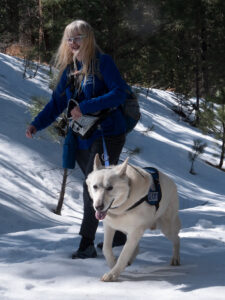
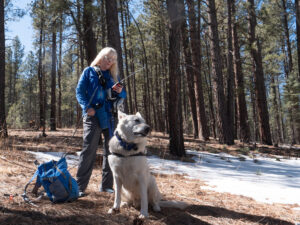
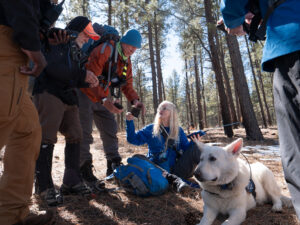
Taos Search and Rescue’s Delinda VanneBrightyn and Berger Blanc Suisse K9 AkioYodasan during the early phase of the hike to find Chad Belvill, an associate broker who went “missing” in his search for mushrooms.

Lessons from the Mountain

“Anything can happen in the blink of an eye,” explains Delinda VanneBrightyn, president of Taos Search and Rescue (TSAR) and leader of the group’s canine unit. “You could twist your ankle and it changes everything. It doesn’t require a severe injury to be dangerous.”

BLYNN BELTRAN/Taos News
Taos Search and Rescue’s Delinda VanneBrightyn and Berger Blanc Suisse K9 AkioYodasan during the early phase of the hike to find Chad Belvill, an associate broker who went “missing” in his search for mushrooms.

Visitors, especially those coming from lower elevations, often underestimate how severe winter conditions can be above 9,000 feet. “It’s stunning to me that people don’t realize the seriousness of climbing mountains in the winter,” VanneBrightyn says. “Reading rescue stories is one way to learn what can go wrong.”

BLYNN BELTRAN/Taos News
The Taos Search and Rescue team comes together as they prepare to triangulate the “missing” mushroom hunter.

She recalls two hikers in their 20s who began their trek late in the day. By the time they turned to descend, the sun had set, temperatures had plummeted, and the snow had iced over. Without proper winter gear — no crampons, ice picks, or insulating layers — they were unable to move. When rescuers finally reached them after 10 p.m., both were hypothermic, one nearly unconscious. A helicopter hoist was the only option.

BLYNN BELTRAN/Taos News
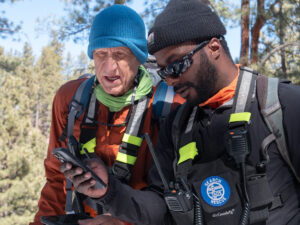
Wes Foote and Ikhide Ikhigbonoaremen set up their GPS tracker to search for the “missing” mushroom hunter.

“One way this could have been prevented is preparation,” VanneBrightyn emphasizes. “Multiple clothing layers, a waterproof outer shell, a bivy sack or sleeping bag, warming packs — all of these could make the difference.”

BLYNN BELTRAN/Taos News
Taos Search and Rescue’s Berger Blanc Suisse AkioYodasan sniffs an empty energy drink can found by the team that was considered a “clue.” A clue can be anything belonging to or left by the subject. Each clue’s reliability is rated. In this case, the can was old and more likely left by another hiker.

More rescues, more warnings

That helicopter mission wasn’t the only emergency last season. “We had at least three rescues early last winter of people who were injured, lost, or in over their heads,” says Matt Rogers, chief of the Taos Ski Valley Fire Department. “A lot of people are not prepared for the hazards of a high alpine environment.”

BLYNN BELTRAN/Taos News
Footprints on the snow can be considered a clue. A clue can be anything belonging to or left by the subject such as personal belonging. Each clue’s reliability is rated.

In one case, a hiker slid down an icy slope and became trapped on the edge of a shelf before a rope team reached him. In another, a camper between Fraser Mountain and Wheeler Peak found himself unable to light a fire or stove in heavy snowdrifts. Fortunately, he carried a personal locator beacon that allowed rescuers to pinpoint his location.

BLYNN BELTRAN/Taos News
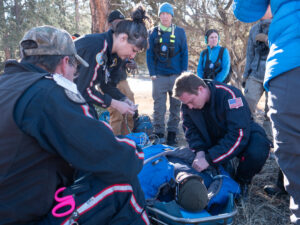
After finding the “injured” Chad Belvill, the mushroom hunter, the team applied first aid on his compound fracture, made sure he’s comfortable and packaged him for the medical airlift.

Rogers stresses the importance of timing. “Bring more equipment than you think you’ll need, and don’t wait until 5 p.m. to call for help,” he says. “Everything is harder after dark — especially a helicopter rescue. The situation has to be life and death before we’ll risk it.”

BLYNN BELTRAN/Taos News
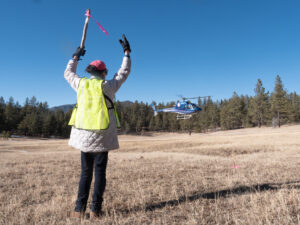
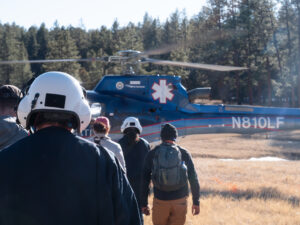
Taos Search and Rescue volunteer Jenny George helps the medivac helicopter land safely in mostly flat plains just off NM 518.

The message from rescuers is clear: don’t underestimate the mountains. A little extra preparation can make the difference between a grand adventure and a life-threatening ordeal.

BLYNN BELTRAN/Taos News
Flight paramedics, from left, Chuck Schultz, Sarah Rivali and Adrian Zabka tend to the “missing” mushroom hunter, Chad Belvill, and get him ready for the medical helicopter.

Preventing Disaster

  • Know your limits: Alpine winter travel is far more demanding than summer hiking.
  • Plan ahead: Check weather and avalanche forecasts, and return before sunset.
  • Gear up: Beyond the “Ten Essentials,” bring traction devices, poles, extra batteries, and fire-starting tools. For longer trips, add an ice pick, locator beacon, hand warmers, and a bivy sack or sleeping bag.
  • Layer wisely: Start with moisture-wicking base layers, add warmth with fleece, and top with a wind- and waterproof shell. Waterproof boots are a must.
  • Watch for hypothermia: Shivering, slurred speech, and confusion are red flags.
  • Don’t go solo: Always let someone know your plan, and consider hiring a guide or exploring with an established ski area.

— Members of TSAR, the TSV fire department, and the Carson National Forest contributed these tips.

BLYNN BELTRAN/Taos News
Flight paramedics and the Taos Search and Rescue volunteers approach the medical helicopter for a hot load/unload practice.

Resources

  • U.S. Forest Service: Winter safety guidance at fs.usda.gov
  • Taos Avalanche Center: Daily avalanche reports at taosavalanchecenter.org
  • American Hiking Society: “Ten Essentials” and winter tips at americanhiking.org

Hotel Willa merges Taos’ past with modern luxury

By Lynne Robinson

Having had the good fortune to have seen the transformation of the old Indian Hills Motel, which had fallen into a state of seedy disrepair, into the chic mid-century modern boutique hotel named for Willa Cather, whose seminal novel “Death Comes to the Archbishop” was completed in Taos, I am pleased to report visitors to Taos are in for a treat in more ways than one.

Casetta, Italian for “little house,” the hospitality management and branding group behind the transformation, was founded by boutique hotel lovers excited by the challenge of giving storied, retro properties new life. Their hotels are architecturally significant, usually historic and frequently hidden gems.

Taking into account into each lodging’s history, Casetta makes a point of honoring the past while designing for the future — collaborating with their partners and artists to design spaces that respect local vernacular and style.

Casetta aims to create serene and healthy environments, leaning into sustainable products and services whenever possible. Their Taos property is no exception.

Hotel Willa is located at the gateway to the Taos Historic District and is the perfect place to start a high desert adventure. Staying true to the ethos of the town — living art colony meets the great outdoors — Hotel Willa invites you to “laze beneath a shady willow tree with a backdrop of creamy stucco walls while watching the sun set over the ink blue mountains,” as their website reads. “Feel the warmth of the light and the winding journey to your destination: Taos. With its pastures and plains, expansive as the creative minds rooted here, visitors will find calm in the space between the mystery and magic that give Taos its enigmatic appeal.”

Inside the newly renovated facade that faces arguably the busiest intersection on Paseo, 50 mindfully appointed guest rooms await an influx of visitors. The common spaces include a stunning bar and restaurant with soaring ceilings and repurposed vigas and corbels. Local architect Doug Patterson brought his know-how and high desert sensibility to the bones of the building.

The restaurant Juliette, led by renowned husband and wife duo chef Johnny Ortiz-Concha and Maida Branch, offers a seasonal menu with local ingredients, including produce from an on-site edible garden.

A huge gallery and art space curated by The Paseo Project’s J. Matthew Thomas includes a gift shop off the lobby and will showcase an ongoing rotation of cutting-edge Taos artists as well as host related events.

A central courtyard conceals a pool house and swimming pool, steam room and sauna, with local and visitor memberships.

FYI

Hotel Willa

233 Paseo del Pueblo Sur, Taos

213-302-4150

hotelwilla.com

En la tierra

By Cindy Brown

In the Land of Enchantment, there are endless possibilities for experiencing the area’s dramatic beauty. A hike or bike ride can become a memorable experience if you’re lucky enough to see a majestic big horn sheep or a herd of elk running across the landscape, or catch the glow of the setting sun lighting up the mountain peaks. Here are some suggestions for favorite summer outdoor adventures on the land.

Hiking

Taos is surrounded by a variety of climate zones, each offering unique views and experiences. Trails to the west of Taos near the Rio Grande cross the desert and grasslands zone and travel along the rim of the river gorge or down to the river itself.

A favorite desert hike is the Big Arsenic Trail in the Wild Rivers Recreation Area of the Rio Grande del Norte National Monument north of Taos. This trail descends about 1 mile from the rim of the gorge down to the Rio Grande and reaches Big Arsenic Spring. Just beyond the spring, look for ancient rock carvings known as petroglyphs.

East of Taos, high altitude trails pass through fields of wildflowers and follow cold mountain streams. A popular summer hike is the Bull-of-the-Woods/Wheeler Peak Trail up 1 mile to Long Canyon, then through the canyon along a stream. Bubbling springs cross the trail, creating a perfect environment for columbine and other wildflowers. Those who are acclimated to higher elevations can continue upward to the summit of Gold Hill at 12,700 feet with its dramatic views to Taos Ski Valley and beyond.

Trail running

All the trails around Taos are also great running destinations. A local group, Taos Trail Runners, organizes regularly runs.

“Whether you’re looking for a scenic jog or an all-day adventure run, Taos has trails for you,” member Brook Eberle says. “The landscape is diverse — you can run through sagebrush and piñon forests with views of the Rio Grande Gorge or climb into aspen groves in the heart of the Sangre de Cristo Mountains. Taos offers a variety of trails, from gradual and wide, like Trail 18, to steep single track, like Gavilan Canyon.

“What makes Taos trails special is the solitude and vastness of our public lands, including the Carson National Forest, Columbine-Hondo Wilderness and the Rio Grande del Norte National Monument,” she says.

Eberle said the Horsethief Mesa trail system north of town is a Taos Trail Runners favorite.

These trails and the new trailhead off NM 522 are examples of collaboration between the Taos community, Enchanted Circle Trails Association, the Forest Service and the Bureau of Land Management.

To learn more about weekly group runs, trail maintenance events and trail information, follow @TaosTrailRunners on Instagram or visit taostrailrunners.com.

Mountain biking

Much of the public land around Taos is open to mountain biking. To find a group of like-minded riders, check out the Taos Mountain Bike Association, which has 120 members of all ages and organizes weekly trail rides. High altitude trails go through the forest, while desert trails offer wide open views. There are bike parks at Taos Ski Valley and Angel Fire, too.

Leonidas Licea whips around a berm during the advanced boys enduro race at Stage 4 of the Big Mountain Enduro Series held in Angel Fire on Sunday (June 30). DANIEL PEARSON/Taos News

To get involved, check the calendar at taosmtb.org for the most up-to-date information. There is also an email list dedicated to announcing upcoming rides and events.

Another organization expanding bicycling opportunities is the Enchanted Circle Trails Association. The group coordinates planning for new trails for bicycling and other recreational users as well as trail maintenance days. Find out more at enchantedcircletrails.org.

Horseback Riding

Horseback riding offers a unique combination of outdoor adventure, nature immersion, and cultural discovery. Whether you’re a seasoned rider or trying it for the first time, exploring on horseback is an unforgettable experience. The rhythm of hooves, fresh mountain air, and the connection with your horse offer a tranquil yet thrilling way to see stunning landscapes. In Northern New Mexico you can ride along the Rio Grande, through mountain forests, or across high desert mesas. Here are a few great places to saddle up:

Taos Area — Cieneguilla Stables (near Pilar): History-rich trail rides. 575-751-2815; Rio Grande Stables (Taos area): Mesa and river rides. 888-508-7667 | riograndestables.net

Red River — Bobcat Pass Wilderness Adventures (Red River): Cowboy evenings with rides, food, and music. 575-754-2769 | bobcatpass.wordpress.com; Red River Stables (Carson National Forest): One- to eight-hour scenic rides. 575-754-1700 | redriverstables.com

Angel Fire — Roadrunner Tours (Angel Fire): Wildlife, gold panning, and lessons. (575) 377-6416 | nancyburch.com

Climbing

Mountain Skills Rock Climbing adventures has been hosting climbing tours in Taos since 1994. Guide and owner Jay Foley says, “I love climbing in Taos because there are so many different areas to choose from — the desert in the Rio Grande gorge to the alpine granite cliffs at 10,000 feet. Taos affords year-round climbing opportunities and a great diversity in climbing styles and locations.”

Some of his favorite climbing locations are Tres Piedras, Comales Canyon and the Vista Verde area. This summer, Mountain Skills will be offering two people for the price of one, or 10 percent off groups of three or more. Visit the website at climbingschoolusa.com or call 575-776-2222.

Take a tour

Taos has a rich culture and history. To really understand Taos, start with a tour of the Taos Pueblo or with Whitefeather Native Cultural Tours that takes you beyond the Pueblo village to ancestral lands.

Screenshot

Heritage Inspirations offers e-biking, hiking and walking tours, along with cultural and stargazing excursions and glamping.

Screenshot

A variety of tours by trolley or walking feature Taos history and even ghost stories. Visit taos.org for a list of tours.

Cindy Brown has been a freelance writer and columnist for the Taos News for the last 14 years focused on the outdoors and health and is the author of “Taos Hiking Guide.”

En el agua

By CIndy Brown

Water is precious in the desert. In Taos, you’ll hear the expression “agua es vida,” meaning “water is life.” From high mountain lakes to rivers to the system of acequias (irrigation ditches) water is vital to nourishing the land. Water can also carry you into ancient canyons for rafting, fishing and soaking adventures.

Rafting

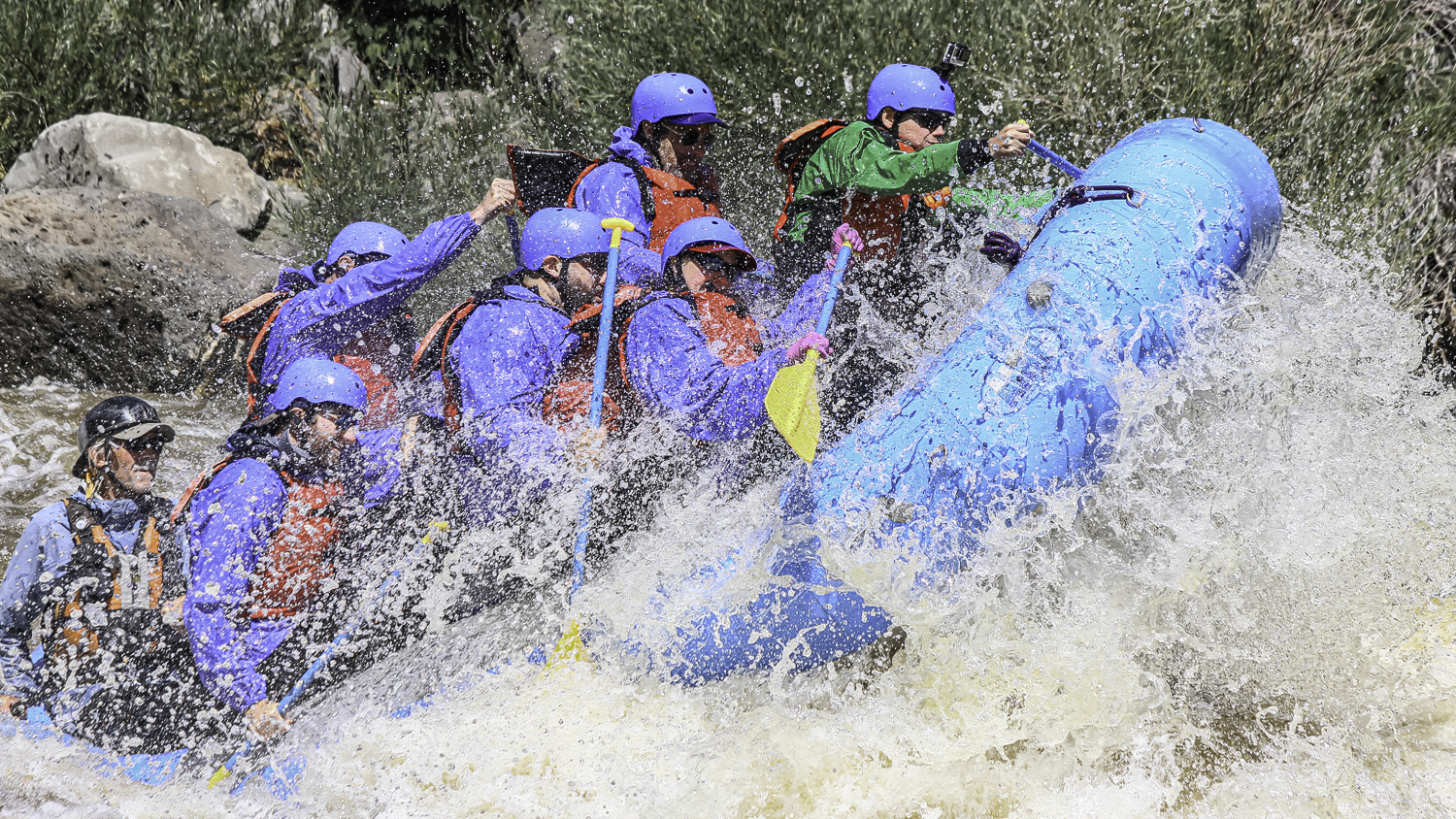
Rafting on the Rio Grande offers all kinds of adventures from quiet float trips to wild whitewater runs. Being on the river with an experienced guide is a great way to learn about the geology, history and wildlife of the area.

The Racecourse section of the Rio Grande is the most popular rafting trip on the river with lots of mellow sections and a few exciting rapids. Many of the local rafting companies have kayaks and stand-up paddleboards, too.

Shay Laos, a guide with Los Rios River Runners, leads the Shea family down a rapid in the Taos Box section of the Rio Grande on Wednesday (May 8). DANIEL PEARSON/Taos News

This year, New Mexico River Adventures is offering adventures like inflatable kayak floats on the Middle Box portion of the river, beginning with a scenic hike through the Rio Grande del Norte National Monument. This trip takes you through a more remote part of the river, and the chances of viewing wildlife are high.

Rafting guides with New Mexico Rafting Adventures compete in the 66th annual Mother’s Day Whitewater Race held on the Rio Grande just south of Pilar on Saturday (May 11). DANIEL PEARSON/Taos News

New Mexico River Adventures has a new location, and in addition to a retail store, they will have food and coffee carts on site.

Soaking

There are several natural springs near Taos.

One of the most popular now has a new access point: the Stagecoach or Manby Hot Springs is located along the Rio Grande. A 2 mile hike along the river takes you to the three warm pools, making for a great day of hiking and soaking.

Zildjian Cognito, of Ojo Caliente, bathes in the Manby Hot Springs on Friday (June 22) in the R’o Grande Gorge.

These hot springs are says to have been used by the Pueblo people before the arrival of Spanish explorers, according to Craig Martin, author of “Enchanted Waters: A Guide to New Mexico’s Hot Springs.” Martin explains when the Chili Line railroad brought visitors to Tres Piedras in the 1880s, they could take a stagecoach to Taos crossing a bridge near the hot springs. Notorious land speculator Arthur Manby claimed 66,000 acres as his own, including the hot springs. He had grand plans for a hotel and resort to be named the Lost Springs of the Aztec. Unfortunately for Manby, he died under mysterious circumstances before he could realize his dream.

Nathan Burton/Taos News
Cimarron Canyon State Park offers spectacular sights and plentiful fishing opportunities, particularly during the fall when brown trout spawn.

To find the new trailhead, go to the John Dunn Bridge in Arroyo Hondo and look for the trail access. Follow the narrow path that climbs over boulders and makes its way through vegetation. Long pants are recommended, as there is poison oak along the river.

The new route replaces the old access point from Tune Drive that is now closed.

Fly fishing

Chaz Kerger of Taos Fly Shop says summer offers a wide range of options for fly fishing, including high mountain and lower valley fishing.

Nathan Burton/Taos News
Cindy Brown, left, high-fives fly fishing guide Chaz Kerger after catching a brown trout Saturday morning (Sept. 24) in Cimarron Canyon State Park.

“You can spin the wheel and choose where to go on any given day,” Kerger says, pointing out that summer is the optimal time to fish mountain creeks because the rest of the year they are too cold.

One favorite is the Rio Costilla that flows in the Valle Vidal and nearby land.

“There are open, grassy meadows around the river, and there is easy access,” Kerger says.

Nathan Burton/Taos News
Taos Fly Shop fishing guide Chaz Kerger, left, teaches Cindy Brown techniques on casting on Saturday (Sept. 24) along the Cimarron River.

Another recommended spot is the Cimarron River as it flows through Cimarron Canyon State Park. “The access is also super easy here, and the fishing is good throughout the park.”

Nathan Burton/Taos News
Using a terrestrial dry fly on top with a mayfly nymph as the subsurface fly, Cindy Brown fly fishes in the Cimarron River Saturday (Sept. 24) near Eagle Nest.

Summer is the time for using dry flies on the surface of the water. “Both spots have good bug hatches in the summer that make the fish want to go for dry flies,” Kerger says.

Nathan Burton/Taos News
Cindy Brown fly fishes along the Cimarron River with the help of Taos Fly Shop guide Chaz Kerger on Saturday (Sept. 24).

Be sure to get a New Mexico fishing license before heading out.

Water sports

Tagged “the world’s fastest-growing water sport” on multiple websites, stand-up paddling is a fun water sport you can try on the Rio Grande or Monte Verde Lake in Angel Fire. Affordable, family-friendly, relaxing and relatively easy to learn, the sport, well-known for working your core, is also great for improving balance, burning fat and losing weight.

Angel Fire Resort, New Mexico

In addition to paddleboards, Monte Verde Lake has a wide range of other options. Starting in mid-May when the boat house opens, you can rent paddleboards or a variation called a pedal board. There are also fishing boats, canoes, kayaks and pedal boats for summ

er fun. Monte Verde Lake is stocked with trout to ensure good fishing.

Aaron Cherney paddles through rapids while on a guided raft trip with Los Rios River Runners through the Taos Box section of the Rio Grande on Wednesday (May 8). DANIEL PEARSON/Taos News

Cindy Brown has been a freelance writer and columnist for the Taos News for the last 14 years focused on the outdoors and health and is the author of “Taos Hiking Guide.”

Into the Woods

Mushroom hunting in Northern New Mexico

By Cindy Brown

Hunting wild mushrooms is like detective work: It requires observation and experience to uncover edible, delicious finds.

As summer rains return, mushroom season peaks in the Sangre de Cristos and surrounding mountains near Taos. Local forager Chad Belvill says snowmelt triggers mushrooms underground, which then surface after cycles of moisture.

“If the monsoon rains don’t come, they may start but dry out before appearing,” he says.

Last July, Belvill and his 8-year-old son, Keenan, guided me through aspen and spruce forests at over 10,000 feet near Hopewell Lake. We searched for porcinis, chanterelles and oysters, ultimately identifying seven edible species. We also encountered toxic varieties like the striking red amanita muscaria and the panther mushroom, which Belvill contrasted with edible boletes by pointing out the gills.

Belvill emphasized the connection between mushrooms and conifer trees. “Fungi attach to tree roots, gathering nutrients in exchange for carbohydrates,” he explained. We focused our search under spruce trees and near moist areas like drainages, where mushrooms thrive.

Keenan, an experienced young forager, helped spot mushrooms along the 1.5-mile loop. With each find, we checked for freshness and insect damage before collecting only the best specimens.

“Mushrooming helps mushrooms reproduce,” Belvill said. “Pick what you can use. There’s an abundance in these forests.”

Belvill’s passion began in childhood, learning from his father in the Midwest, and grew during his time on a fire crew in Oregon. He’s now spent 17 years foraging around Taos and even grows mushrooms himself.

Tips for beginners

• Go with an expert or group. Lance Hale of the New Mexico Mycological Society recommends beginners learn with experienced foragers. “There are thousands of types — only a small number are deadly, but many can make you sick.”

• Seek mushrooms above 10,000 feet, in damp areas or under spruce trees.

• Use guides like “All That the Rain Promises and More” by David Arora.

• If unsure, don’t eat it.

• To cook wild mushrooms, first clean them with a brush or cold water, pat dry, sauté in a hot pan, adding butter, salt or spices.

To schedule a guided foray, contact Chad Belvill at cbelvill13@gmail.com.

Wild & Woolly

Explore Northern New Mexico with Wild Earth Llama Adventures

By Olivia Lewis

In the alpine forests and volcanic canyons of northern New Mexico, Wild Earth Llama Adventures offers an unforgettable way to explore the backcountry — by trekking with llamas. Founded in 1995 by Stuart Wilde, the outfitter combines the joy of hiking with the charm of these sure-footed animals, all while providing a deep dive into the region’s natural and cultural richness.

Based near Taos, Wild Earth Llama Adventures specializes in guided wilderness treks through some of the Southwest’s most spectacular and seldom-visited landscapes. Guests can choose from single-day “Take a Llama to Lunch” hikes to multi-day backcountry adventures. Treks are custom designed for all ages and fitness levels and offer access to trails in the Carson National Forest and the Rio Grande Gorge.

“The llamas carry your gear, so you can relax and fully experience the scenery,” Wilde explains. “It’s about slowing down, breathing deep and letting nature take over.”

Popular trekking destinations include the nearby Columbine/Hondo Wilderness and Wheeler Peak Wilderness — home to New Mexico’s highest summit at 13,161 feet. For those seeking solitude, the Latir Peak Wilderness and Valle Vidal offer unspoiled beauty and abundant wildlife, including bighorn sheep and elk.

Each trek is led by experienced naturalist guides who share knowledge of the area’s ecology, edible and medicinal plants, and Indigenous history. Whether you’re wandering the high country or descending into the volcanic chasm of the Rio Grande del Norte National Monument, you’ll be immersed in a living classroom.

You’ll also quickly learn each llama has their own personality.

There’s Chaco, the affectionate one who seeks out kisses; Loki, the troublemaker who can untie his own rope; Denali, the eager-to-lead rookie; and the gentle veteran Rio, who loves munching pine needles as much as leaving his “mark” beside the trail.

On day hikes, guests are treated to gourmet wilderness lunches.

“The llamas pack in everything from fresh fruits and hearty sandwiches on homemade bread to natural sodas and decadent desserts,” Wilde says. “It’s not just a picnic — it’s a feast with a view.”

Beyond the adventures, the company is also committed to rescue. Many of the llamas on the trail were saved from neglect or misguided ownership.

“People think llamas will guard sheep like dogs,” Wilde says, recounting how one llama, Chaco, was nearly euthanized after failing in that role. Now, Chaco’s a trail favorite, known for his affection and quirky personality.

Wilde, a longtime Taos local, started llama trekking to explore the mountains with his toddler in tow. A book on llamas arriving in his mailbox sparked an idea that became a life’s calling.

“Working with animals, being in nature — this is my cathedral, my fitness center and my sanctuary,” he says.

Whether you’re a seasoned hiker or a curious first-timer, Wild Earth Llama Adventures offers a wilderness experience unlike any other — one where you’ll learn, laugh and be led by a woolly companion through some of the Southwest’s most breathtaking terrain.

For details or reservations, visit llamaadventures.com or call 888-895-5262.

Perfect Pairings

As you plan your high-altitude adventures in Northern New Mexico this summer, be sure to consider some of the perfect pairings of outdoor fun followed by sublime food and drink.

By Cindy Brown
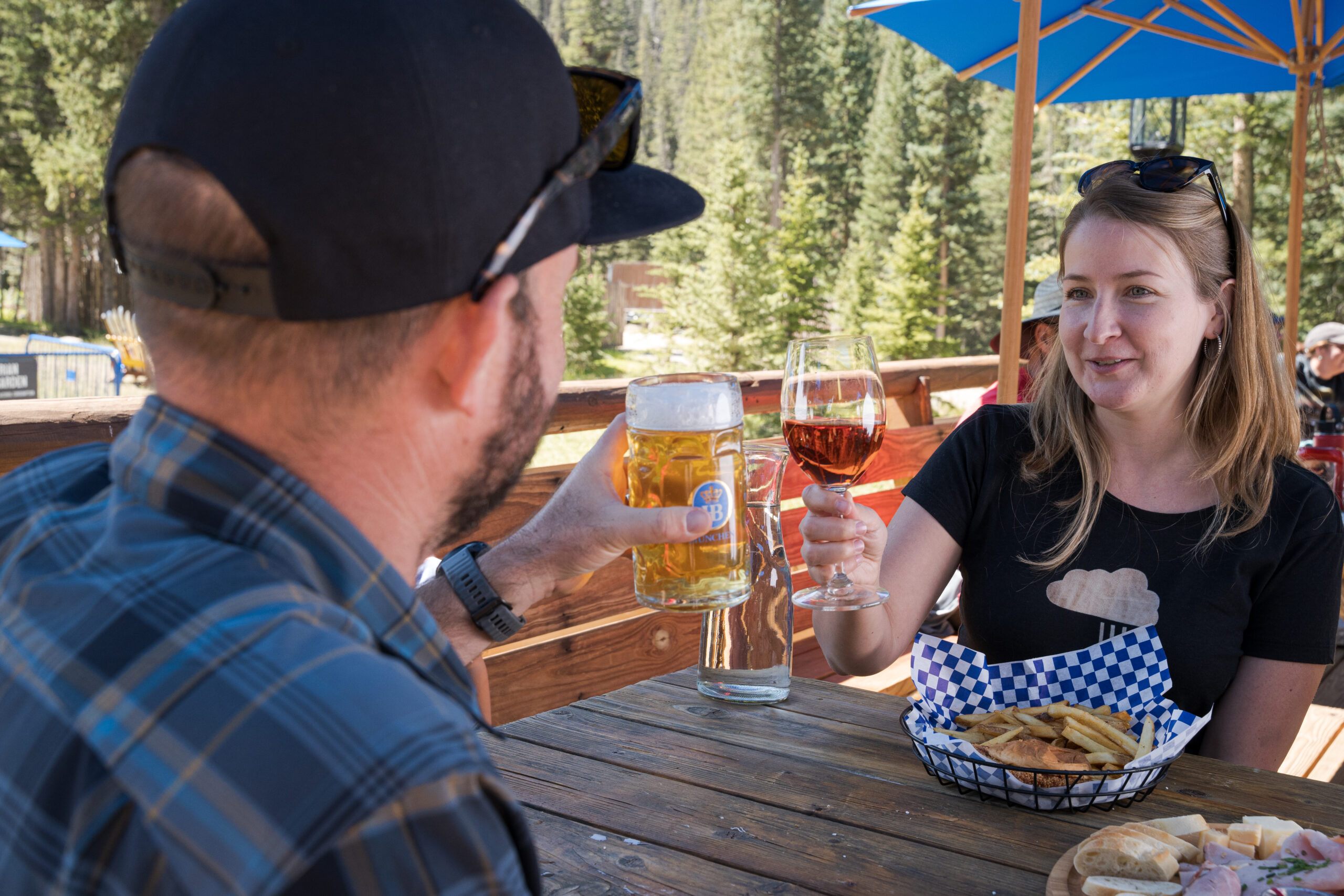
Enjoying the deck at The Bavarian (Photo by Liam Doran)

Continue reading “Perfect Pairings”

Kids Corner

Fun things to do with the kids while in Taos

By Josephine Ashton

Local families and visitors with kids will also likely Google: “Find kids’ interests in Taos.” Surprising activities in all seasons are hiding in plain sight, waiting to be discovered.

Continue reading “Kids Corner”

Rock Star

Meet the mountain with an epic rock climbing adventure  

By Jay Foley

As you take in the mountains and serene mesa vistas of Taos County, look closely and you will notice several cliffs dotting this majestic Northern New Mexico landscape.

Continue reading “Rock Star”

Camping 101

Camping, glamping or whatever, these basic rules will not fail 

By Craig Smith

Northern New Mexico is a camper’s paradise. Whether you use an RV, car or tent, camping is a great way to discover Taos and its beautiful surroundings. But — plan ahead. 


Continue reading “Camping 101”

Hiking Taos

Sage advice and solid 411 on hiking in Northern New Mexico 

By Cindy Brown

One early summer morning, a friend and I were hiking quietly on a trail in southern Taos County.

Continue reading “Hiking Taos”