Perched at 7,200 feet on the edge of Taos, the Red Willow People have called this sacred landscape home for well over a millennium. Taos Pueblo is one of the oldest continuously inhabited communities in the United States, honored as both a National Historic Landmark and a UNESCO World Heritage Site. Stroll the terraced adobe dwellings of North and South Pueblo, where roughly 150 residents still live within the walls while many others maintain homes across the broader 99,000-acre land base. A 20–30 minute guided tour offers a respectful glimpse into Pueblo life — its history, spiritual traditions, and artistic legacy — while friendly shops invite visitors to bring home traditional pottery, silverwork, weavings and more, all tax-free.
Important note: Taos Pueblo remains a living, sovereign community. Photography is allowed for personal use only; photographing tribal members or sacred areas requires explicit permission. Seasonal closures may apply, especially in late winter through early spring — call ahead to ensure access. Tiwa, the ancestral language, still echoes in ceremony and daily life amid the rhythms of modern life.
Welcome with curiosity, tread with respect—and leave with wonder.
Visit taospueblo.com or call 575-758-1028 before your visit.
At the end of NM 150, the Village of Taos Ski Valley welcomes adventure-seekers with big-mountain terrain and small-village charm, all under the shadow of Wheeler Peak.
Founded in the 1950s by Swiss-German ski pioneer Ernie Blake, the resort remains fiercely independent while celebrating 70 years of legendary skiing. Skiers and riders can choose from beginner slopes to double-black-diamond runs on Kachina Peak, while the iconic “Ski Weeks” continue to set Taos apart as the only program of its kind in North America. New for 2026, Women’s Ski Week expands to three sessions, alongside fresh programs for kids and teens.
Longtime operations chief John Kelly stepped into the CEO role this year and the resort’s Master Development Plan — approved this year by the U.S. Forest Service — includes a base-to-base gondola, new Nordic and snowshoe trails, upgraded lifts, and other projects designed to expand recreation while honoring Taos’ commitment to being “better, not bigger.”
With new direct flights connecting Taos to Denver, Dallas, Austin, San Diego, and Los Angeles, getting here is easier than ever — yet the resort still delivers the same pure mountain escape, blending challenge, charm, and community.
Info: Village of Taos Ski Valley Chamber of Commerce: 575-776-7852 • taosskivalley.com; Taos Ski Valley, Inc.: 800-776-1111 • skitaos.com
Art-filled streets, timeless history, village soul
Welcome to Arroyo Seco — the luminous village at the base of El Salto Mountain that whispers “pause awhile.”
Nestled between Taos and Taos Ski Valley along NM 150, it carries 200 years of history. Its adobe storefronts house a surprising mix of galleries, cafés, and boutiques. Shoppers can wander into Arroyo Seco Mercantile, a treasure trove of vintage finds and quirky gifts, or explore Taos Wools, where hand-dyed yarns echo the colors of the high desert.
Ceramics are everywhere — Logan Wannamaker Pottery, Rottenstone Pottery, and the Old Bones gallery for clay and textiles showcase the region’s thriving clay community.
Fine Art New Mexico continues to draw visitors with its nationally known print collection, while Santos y Más delights with santos, milagros, and folk art passed down through generations.
Hungry? Options range from a scoop at Taos Cow to farm-to-table meals at ACEQ, hearty plates at Abe’s Cantina y Cocina, and market-fresh bites at Sol Food.
Visit the restored church and cemetery gardens of La Santisima Trinidad, originally built in 1834. The altar screen was painted by famed 19th century santero José de García Gonzales. In 2009, the historic church was given a place on the official State Register of Cultural Properties.
In Seco, art, history, and community come together seamlessly. Whether you arrive for the skiing, the shopping, or just the scenery, you’ll likely leave with something more: the feeling of having stumbled into a place that still belongs to itself.
Red River’s western charm and snowy peaks make it the quintessential mountain playground. Once a gold and silver mining boomtown, today this mile-long community welcomes winter visitors with an easygoing vibe, big adventure, and genuine hospitality. The Red River Ski & Summer Area sits right in the heart of town, with two chairlifts rising directly from the town’s center. Skiers and snowboarders enjoy 64 trails across 290 skiable acres, three terrain parks, and seven lifts. With an average 214 inches of snow and 300 days of sunshine, conditions are reliably good — and Red River backs it up with one of the most advanced snowmaking systems in the Rockies. Torchlight parades with fireworks light up the slopes on Saturdays and holidays. Off the slopes, snowmobilers and winter UTV tours head deep into the backcountry and Enchanted Forest Cross Country Ski & Snowshoe Area offers 30+ kilometers of groomed trails. Around town, you’ll find mom-and-pop shops, live music at local saloons and hearty meals. Recent investments in new sidewalks, public art and Mallette Park upgrades show the town’s commitment to keeping its historic character fresh. Whether you’re here for après-ski music, Mardi Gras in the Mountains, or just the hush of snow falling on a quiet night, Red River offers the perfect blend of old-west charm and winter fun.
Angel Fire, east of Taos, lives up to its name. The Moache Utes, who once gazed at the fiery glow of sunsets on Agua Fría Peak, called it the “fire of the gods.” Today, that glow shines on a village known for big-mountain adventure and small-town charm. Angel Fire Resort anchors the community with 82 trails, four glade runs, and more than 2,000 vertical feet of skiing/riding. Families flock to the six-lane tubing hill, while weekend night skiing keeps the slopes alive under the stars. Horse-drawn sleigh rides, shopping and après-ski fun round out the winter magic.
Dining comes with a view: Elements at the Country Club offers refined cuisine, while the Summit Haus at 10,600 feet pairs comfort food with panoramas into Colorado. Down in the village, Mikuna Grill blends Peruvian and Southwestern flavors, while El Jefe delivers tacos and tequila at the resort base. The après scene is buzzing with newcomers. Nuckolls Brewing Company opened in 2024 with a 20-barrel brewhouse, expansive taproom, and beer garden. Elevated Pour, a sleek wine and cocktail bar beside the Angel Fire Visitor Center, serves curated wines, craft cocktails, and small plates.
Getting here is easier, too. Advanced Air now offers seasonal 40-minute flights from Albuquerque to Angel Fire Airport — one of the highest in the country — complete with village shuttle connections.
Visitor Center • 575-377-6555 • visitangelfirenm.com | Angel Fire Resort • 800-633-7463 • angelfireresort.com | Advanced Airlines • advancedairlines.com/airports/angel-fire-airport
Mountain Stats – Angel Fire Resort
* Season: Mid-December – late March (weather permitting)
* Base Elevation: 8,600 feet
* Summit Elevation: 10,677 feet
* Vertical Drop: 2,077 feet
* Skiable Acres: 560
* Trails: 82 (beginner to advanced) + 4 glade runs
Perched at 8,300 feet in the Moreno Valley, Eagle Nest is a laid-back alpine village on the Enchanted Circle Scenic Byway. Once a rowdy outpost of miners and gunfighters, today it’s a quiet hub for outdoor adventure.
Winter transforms Eagle Nest Lake State Park into a frozen playground. Anglers test their nerve on the ice, reeling in kokanee salmon, rainbow trout, pike and perch. Kokanee snagging season runs until Dec. 31, and the lake hosts the annual Ice Fishing Tournament Jan. 31, 2026. For the bold, the Polar Bear Plunge & Stomp on New Year’s Day delivers a bracing start to the year. Nearby Cimarron Canyon State Park offers snowshoeing and fly fishing through dramatic cliffs and ponderosa forest.
In town, the main street brims with character — rustic lodges, cozy diners, gift shops and Comanche Creek Brewing Company, where mountain views pair with craft beer. The community gathers for traditions like the Laguna Vista Saloon Thanksgiving Potluck and a Christmas decorating contest that lights up the village in December.
With Wheeler Peak on the horizon and elk, deer and bald eagles roaming the valley, Eagle Nest is a peaceful base between Angel Fire and Red River — close to ski slopes, yet worlds away from the bustle.
Visitor Info
Eagle Nest Visitor Center & Gateway Museum – 505-721-0704 – visiteaglenest.org
Eagle Nest Chamber of Commerce – eaglenestchamber.com
Less than an hour north of Taos, Questa is the northern gateway to the Enchanted Circle and a launch point into the Río Grande del Norte National Monument.
At 7,500 feet, this historic village sits between alpine forests and the Rio Grande Gorge, offering year-round adventure and small-town charm. When winter snows blanket the mesas, locals swap hiking boots for skis and snowshoes.
The Rinconada Loop Trail at Wild Rivers Recreation Area serves up six miles of cross-country skiing with sweeping gorge views, while Columbine Canyon transforms into a snowy wonderland. Eagle Rock Lake even draws hardy anglers for ice fishing. For more adrenaline, snowmobilers head up Cabresto Road into the Carson National Forest.
In town, the 19th-century San Antonio de Padua Church stands at the heart of the historic plaza, lovingly restored by volunteers and still central to community celebrations like December’s Alumbra de Questa, when luminarias light the way to a craft market and evening of music.
Creative energy thrives here, too. The Questa Creative Council supports local makers with art tours, plein air painting festivals, and a popular summer farmers market featuring handmade tortillas, tamales, and fresh regional produce.
For visitors seeking the authentic, Questa delivers — unspoiled landscapes, rich history, and a community that invites you to “find what’s real.”
Kit Carson Road is more than a route through Taos’ historic district — it’s a stroll through centuries of stories, art and architecture. Along this storied street you’ll find some of the town’s most distinctive places to stay: historic inns that blend adobe charm with family legacies, artistic heritage and cultural treasures you won’t find anywhere else. Here are four historic lodgings where your overnight stay comes with a side of Taos history.
Casa Benavides Inn
Heritage, art, and the best breakfast in town
Casa Benavides is a family-run landmark with roots in two of Taos’ best-known families: the McCarthys and the Benavides. Established in the late 1980s by (the late) Barbara Benavides McCarthy and her husband Tom, the inn grew from just seven rooms into a sprawling 36-room retreat. The compound includes former residences (both Barbara and Tom’s childhood residences), a one-time welfare office, and the old Lewis Art Gallery, all tied together with Barbara’s design touch — think Southwestern textiles, salvaged barn doors from Tom’s 1904 grandfather’s building and walls adorned with regional art. And at nearby McCarthy Plaza, Tom and Barbara’s daughter Ruthann McCarthy runs Legacy Cafe, extending the family’s hospitality tradition onto Taos’ dining scene. With Kit Carson Park a short walk away, concert-goers can stroll rather than drive.
The Extra: Breakfast is the star. Barbara’s famous “Drop Dead Granola,” frittatas with red chile, homemade muffins, French toast with fresh fruit are so beloved that repeat guests plan trips around them.
Casa Benavides Inn
137 Kit Carson Road, Taos
Rates: Typically under $200 per night
575-758-1772
casabenavides.com
La Doña Luz Inn (and El Rincón Trading Post)
An inn masquerading as an art museum — with Taos’ oldest trading post next door
Just off Kit Carson Road, La Doña Luz is filled to the brim with original art, Native and Spanish Colonial antiques, and whimsical design. The inn’s name honors Doña Luz Lucero de Martínez, a well-educated Taoseña whose family once hosted dignitaries here in the early 1800s. Today, Paco Castillo — grandson of famed trader and artist Ralph Meyers — runs the inn as both a place of lodging and a living museum. Each suite has its own theme: the Red Willow Suite honors Taos Pueblo; La Madonna celebrates maternal love with art depicting the Virgin and Child; and the Rainbow Room, with its rooftop hot tub and hand-painted ceiling, pays homage to Mabel Dodge Luhan through a design inspired by Paco’s grandfather. Right next door is El Rincón, the trading post Meyers opened more than a century ago. Together, the inn and trading post embody more than 100 years of Taos family history, hospitality, and artistic exchange.
The Extra: Guests of La Doña Luz’s Rainbow Room can soak in a rooftop hot tub while gazing at Taos Mountain. Then, with El Rincón steps away, they can explore the town’s oldest trading post — part boutique, part museum — and leave with a piece of Taos’ living history.
La Doña Luz Inn
114C Kit Carson Road, Taos, NM
Rates: $129–$289 per night (varies by suite)
Highlights: Rooftop hot tub (Rainbow Room), Native and Spanish Colonial artifacts, Taos’ oldest trading post on-site
575-758-9000
stayintaos.com
Hacienda del Sol
Adobe elegance with a world-class art connection
Dating back to 1804, Hacienda del Sol has sheltered everyone from traders to modern travelers. Built as a traditional adobe compound, it eventually became the home of Mabel Dodge Luhan and Tony Lujan, whose circle of artists and writers defined early 20th-century Taos. D.H. Lawrence stayed here while drafting works, Willa Cather gathered notes for Death Comes for the Archbishop, and Georgia O’Keeffe came often from nearby Abiquiú and painted her sunflowers there. Later, historian Frank Waters used the inn as his base while completing “The Man Who Killed the Deer. ” In this way, the Hacienda became not just a home but a crucible of Southwestern art and literature. The inn’s architecture is quintessentially Taos with its thick adobe walls, vigas and kiva fireplaces. Today, its rooms and suites blend historic atmosphere with modern comforts, from clawfoot tubs and steam showers to private patios with mountain views. Owners Mike and Blair Morton are lifelong creatives who bring a passion for art, history, nature and literature to this historic property. They continue to uncover the place’s compelling stories and characters, many of which had been forgotten, and are proud to share this historic slice of Taos with their guests and the community.
The Extra: The Hacienda holds treasures as distinctive as its history. Guests can view a rare portfolio of Edward Curtis’s “The North American Indian,” a monumental 20-volume photographic study of Indigenous life. Contemporary legacies linger too: Navajo artist R.C. Gorman left his mark here with custom tile work throughout the suites. And for travelers seeking inspiration, the Hacienda continues to host writers’ residencies, retreats, and intimate cultural gatherings — ensuring its tradition as a hub of creativity remains unbroken.
Hacienda del Sol
109 Mabel Dodge Lane, Taos, NM
Rates: $150–$325 per night (varies by room/suite)
575-758-0287
haciendadelsoltaos.com
Mabel Dodge Luhan House
Where artists, writers, and dreamers found inspiration
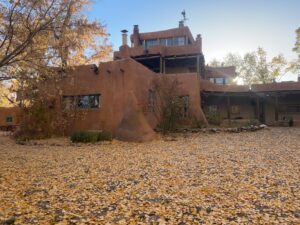
Few places in Taos hold as much cultural weight as the Mabel Dodge Luhan House, also known as the “Big House.” Purchased in 1918 by arts patron Mabel Dodge and expanded with the help of her Pueblo husband Tony Lujan, the adobe compound became a magnet for creative minds. Georgia O’Keeffe, D.H. Lawrence, Ansel Adams, and Carl Jung all gathered here, leaving their imprint on Taos’ artistic identity. Today, the National Historic Landmark operates as a 501(c)3 nonprofit organization with 21 rooms spread across the main house and cottages. Thick adobe walls set the mood, while individually decorated rooms feature original art, handcrafted details, and — in many cases —terraces with mountain views. Breakfast is included, and the property offers meeting spaces and grounds designed for workshops and small conferences.
The Extra: True to its legacy, the inn continues to host workshops in writing, art, and wellness. Guests staying during these periods may join communal meals and conversations — a chance to experience the house as the creative salon Mabel intended.
Photo by Julianna Spotted Corn
Mabel Dodge Luhan House
240 Morada Lane, Taos, NM
Rates: $125–$250 per night (when not reserved for workshops)
From powder days to bluebird afternoons, Northern New Mexico’s slopes call for gear that performs as beautifully as the scenery. These locally sourced picks will keep you warm, dry and smiling from first chair to après.
Just Point It Skis & Boards
Born on the steep slopes of Taos Ski Valley, these hand-built skis and boards by Ted and Nick Wolff blend bold design with high performance. Available at justpointit.com and select Taos retailers.
Tonia DeBellis Holli Jacket
An après-ski favorite — stylish warmth with a touch of luxury. Available at Boot Worx, Taos.
Turtle Fur Brain Shroud Beanie
Lightweight and helmet-friendly, this beanie wicks moisture while keeping ears warm. Available at Adventure Ski Shops, Taos.
Forsake Winter Boots
Waterproof, rugged and street-smart — ideal for après or winter walks. Available at Boot Worx, Taos.
Salomon Double Boa Ski Boots
Engineered for comfort and performance, fitted by expert bootfitters. Available at Winter Sports, Angel Fire.
Lange Shadow Ski Boot
Responsive all-mountain performance in a boot that fits like a glove. Available at All Seasons Sports, Red River.
Oakley Ski Goggles
High-definition lenses and superior fit deliver clear vision and comfort. Available at Boot Worx in Taos Ski Valley, Sitzmark Sports in Red River and Winter Sports in Angel Fire
Spy Goggles
Stylish, high-contrast lenses keep visibility sharp on bright alpine days. Available at Adventure Ski Shops, Taos.
POC Helmet
Industry-leading safety with sleek design and comfort. Available at Winter Sports, Angel Fire.
Hestra Gloves
Heirloom-quality leather gloves that offer warmth and dexterity in any weather. Available at Winter Sports, Angel Fire.
CamelBak Hydration Pack
Stay hydrated on the hill or trail with this lightweight essential. Available at Boot Worx, Taos.
Portland Solar Eclipse SPF 15 Lip Balm
Moisturizing and protective, made for high-altitude sun. Available at All Seasons Sports, Red River.
Where to Gear Up
Adventure Ski Shops
Taos | (575) 758-1167 | adventureskishop.com
Family-owned for more than 40 years, Adventure Ski Shops is Taos’s trusted hub for rentals, gear and apparel. Moises Martinez and his crew offer expert fittings, warm service and a full range of equipment for skiers and snowboarders of every level.
Formerly Big Kahunas, this legendary shop continues BootDoctors’ bootfitting tradition. Dick Stillson and his team specialize in precision fittings, quality apparel and personalized service at the base of Taos Ski Valley.
Just Point It
Taos | (505) 681-9555 | justpointit.com
Brothers Ted and Nick Wolff design adventure-inspired ski gear and apparel that celebrate the Taos lifestyle — bold, art-driven and proudly local. Their creations reflect the spirit of “just pointing it” toward adventure.
Mudd N Flood Mountain Shop
Taos | (575) 758-7654 | muddnflood.com
Since 1991, Elana Lombard and Chris Pieper have built this gear-filled favorite into a Taos institution. Stop in for expert advice, top outdoor brands, local insight — and maybe a taste of Elana’s goat cheese.
Winter Sports
10 N. Angel Fire Rd., Angel Fire | (575) 377-4499 | angelfireresort.com
Located at The Lodge, Winter Sports is Angel Fire’s premier full-service ski shop. Chris Schell’s team offers expert bootfitting, premium skis, demo rentals and stylish après-ski apparel.
All Seasons Sports
400 W. Main St., Red River | (575) 754-2308 | allseasonsrr.com
A Red River classic now run by Daniel Lamb, All Seasons Sports continues the family’s legacy of friendly service, reliable rentals and top gear for skiers and riders.
Taos is many things: art colony, ski town, and a historic crossroads of cultures. And that’s not all. For centuries Taos has also been a place of palpable, tangible spirit. The Sangre de Cristo mountains have long whispered to seekers, storytellers, and healers alike. Today, that call unfolds in both brick-and-mortar and online shops, where the mystical and the mundane co-author the story of a day, a weekend, or a lifetime in Taos, sharing coffee with friends, laughter that ripples through the canyons, and sunlight that playfully pirouettes across crystals.
Taos also holds space for heartache. Loss weaves itself into every community, and here, healing is met not with hurried fixes but with reverence. Grief is honored as a passage, a teacher, and even a source of unexpected beauty. In quiet rituals, shared stories, and the simple act of gathering, sorrow begins to soften, opening room for memory, meaning, and the slow return of light. One local metaphysical shop has recognize the need for more healing and is transitioning to grief-centered work.
Crone & Crow: Where wisdom perches and wonder flutters
Step into Crone & Crow on Civic Plaza Drive, and you feel the subtle shift. Dark purple walls cradle centuries of secrets. Velvet chairs invite you to linger as a whisper of herbs and candle smoke lingers in the air. An antique roll-top desk hints that you’ve entered a space that is part apothecary, part classroom, part sanctuary all timeless and alive.
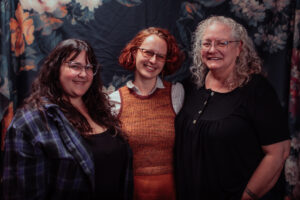
Opened in 2025 by Malea Powell (a.k.a. “Auntie M”) and Nicole Trissell, with Naomi Gomez guiding the shop as general manager and tea mistress, Crone & Crow is more than a retail shop. It’s a doorway into community and spirit. “We’re here to encourage people to embrace their connection to the land, themselves, and the community,” Powell explains of the mystical space.
The name captures the shop’s soul: “Crone” honors ancestral wisdom, while “Crow” carries stories of the world. The shop, in essence, carries the tales of Taos’ land and people.
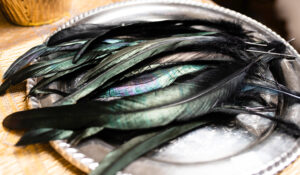
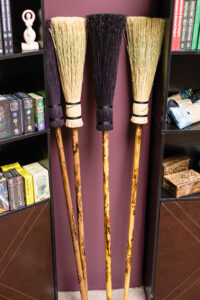
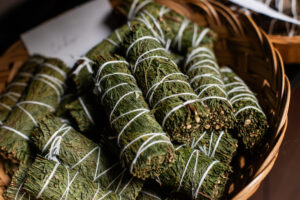
Shelves overflow with tarot decks, herbs, candles alongside whimsical and meaningful gifts, yet it’s the practitioners who animate the shop. Reiki, trauma-informed yoga, tarot readings, and intuitive guidance hum through midweek and weekend sessions, led by Karen Brown, Jack Holland, Linda Lauver, Powell, and Trissell. Workshops, moon circles, sabbats, and community gatherings make Crone & Crow a hearth for Taos’ magical energy.
Owned and operated by Nicole Scotto, a Board-Certified Nurse, Women’s Health Advocate and Sex Educator, as well as a home health and hospice nurse, Her Sacred Alchemy has transformed from a brick-and-mortar shop to an online sanctuary centered on grief, healing, and intentional living. Stay tuned to the website as this shop transforms into a deeper place of healing from loss. Her Sacred Alchemy | 917-532-5233 | hersacredalchemy.com
Empowering Alchemy: Healing in beeswax and vibration
Robyn O’Boyle’s work spans Shamanic Soul Recovery, sound healing, bodywork, and vibrational medicine. Her hand-poured beeswax candles are both art and medicine, reflecting decades of care and a path shaped by resilience. EmpoweringAlchemy.com | Etsy: BeeLuminousTaos
Though no longer a storefront, Native Roots thrives as a school of ancestral folk and herbal medicine, blending Indigenous, Celtic, Jewish, and other traditions. Classes emphasize reciprocity, humility, and community care, often offered by donation for tribally affiliated members. 914-400-7558 | nativerootsschool.com
In Taos, spirit is tangible, walking the streets with you, flickering in candlelight, and murmuring in the mountains. These shops don’t just sell tools and resources, they open portals, invite curiosity, and remind us that magic isn’t hidden, it’s just waiting to be noticed.
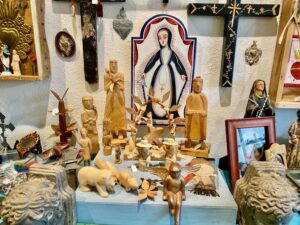
Two Graces has found a new home at 135 North Plaza in historic downtown Taos, but longtime fans know its roots run deep. For more than 20 years, owners Robert Cafazzo and Holly Sievers have transformed their shop into a curated trove of vintage Hopi Kachina dolls, Santos (retablos and bultos), Spanish Colonial furniture, rare books, and centuries-old curiosities.
JEANS PINEDA/For the Taos News For the last 20 years, Robert Cafazzo and Holly Sievers have transformed Two Graces into a curated treasure trove. This summer, the gallery found a new home just north of Taos Plaza.
“We tend to live with an item in our home until it’s time for it to go to the store, the store is an extension of our collections, the things we love,” Cafazzo says. “Most everything we bring into the shop has lived with us for a while because it’s all very special to us. While we live with items we also take the time to research more information about these objects.”
OLIVIA LEWIS/Taos News Two Graces gallery, a shop rife with rare books, local artwork and centuries-old curiosities, found a new home this summer just north of Taos Plaza.
The couple began Two Graces in 2003 at the Ranchos de Taos Plaza, later moving to Barela Lane. When rent pressures forced another change, they considered going fully online but ultimately chose to remain near what Cafazzo calls the “heart of Taos.” Their new 1,200-square-foot location — more than double the size of their previous shop — offers room for a dedicated gallery. “One of our neighbors brought us flowers, all of our new neighbors have been overwhelmingly supportive.” Cafazzo says. “We feel really blessed.”
Treasures With Stories
Two Graces is filled with objects that feel lived-in and loved. Among the rarest items are the retablos of Northern New Mexico — Catholic devotional images painted on wood. “They’re old, from the 1700s,” Cafazzo says. “They’re rare and desirable, truly unique regional folk art. When you see collections of lots of them together, it’s amazing.” Retablos can cost thousands due to their rarity and desirability, they complete the look of a ‘Southwest-style’ home.
OLIVIA LEWIS/Taos News Koshare Kachina dolls
The collection closest to Cafazzo’s heart is that of the antique and vintage Hopi Kachina dolls. Two Graces houses a range of these carvings, some with headdresses, others simple brown-earth-colored ‘mudhead’ Kachinas. “I like when a doll has wear to it,” he says, pointing to one with paint rubbed away. “You can see this has been played with, where a little kid held it tight. That’s how you know somebody loved it and you can feel that love.”
Cafazzo is meticulous about research, dating items by materials and provenance — a cottonwood root carving helped him identify an 1889 piece, while a Fred Harvey label tied another to the 1920s. “Collectors want to know when something was made, and I give them a range of 20 years,” he says. “I’m also big on letting people know when something’s a fake. If you respect the work, you have to be honest.” Collecting, he emphasizes, isn’t about money but respect.
OLIVIA LEWIS/Taos News Two Graces’ co-owner Robert Cafazzo
He also restores wooden objects such as santo carvings, WPA furniture, and Kachina dolls, skills he learned from others who were willing to teach him.
“You’re always on the lookout, if you have a good eye for stuff, you’re going to find something good,” Cafazzo says. “It works better to buy things you love.”
A Book Lover’s Haven
Books remain central to Two Graces. The gallery stocks out-of-print gems such as Taos Mosaic: A Portrait of a New Mexican Village by Claire Morrill and works by Frank Waters and Mabel Dodge Luhan. Cafazzo often sells volumes from his personal collection at prices friendlier than online listings.
OLIVIA LEWIS/Taos News Two Graces, a shop rife with rare books, local artwork and centuries-old curiosities, found a new home this summer just north of Taos Plaza.
“When we first started 22 years ago, I was told not to do books,” he says. “Books are one of our favorite things to have. People love to see books, Taos really needed a bookstore back on the plaza.”
Now that Two Graces has room for presenting art there will be ever revolving exhibitions of historic Taos artworks and the works of Cafazzo and Sievers.
OLIVIA LEWIS/Taos News A hand-carved Papua New Guinean figure
More than a shop, Two Graces is a space for discovery. “We are striving to create vignettes and moments with special pieces in groupings and arrangements that will draw people in.”
Visitors are encouraged to linger, leaf through books, and hold history in their hands. Cafazzo and Sievers take turns at the counter, curating not just collections but connections. “Unless you’re sharing knowledge, it’s secret knowledge, which is going to get forgotten,” Cafazzo says. “If I share it with people, maybe they’ll remember and pass it on.”
Explore Taos this winter through its museums, galleries, and pop-ups
By Ellen Miller-Goins
Winter in Taos brings major museum shows you can linger in for hours, intimate openings where you’ll meet the artists, and pop-up markets perfect for one-of-a-kind gifts. Bundle up, grab a cocoa, and make a loop through town — there’s fresh work on the walls all season long.
Beings #35
Winter’s Must-See Museums
Harwood Museum of Art. Founded in 1923, the Harwood is New Mexico’s second-oldest art museum and anchors Ledoux Street with an impressive collection spanning Hispanic devotional art to modern and contemporary works. A cultural cornerstone, the Harwood is home to Agnes Martin’s only permanent installation. 238 Ledoux St., Taos | 575-758-9826 | harwoodmuseum.org
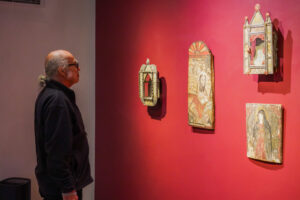
Steve Glover admires historic art pieces created by unidentifiable artists that are displayed in The Unknown Santeros exhibit at the Harwood Museum of Art on Wednesday, March 6, 2024 in Taos. DANIEL PEARSON/Taos News
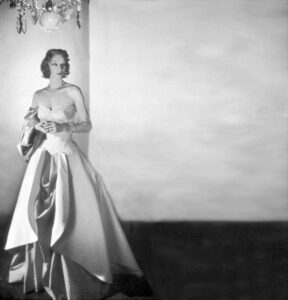
Millicent Rogers Museum. Named for Standard Oil heiress and arts patron Millicent Rogers, MRM houses an unparalleled collection of Native American jewelry, Hispanic textiles, and Spanish Colonial art. Seasonal rotations and artist weekends keep the galleries lively. Don’t miss Rogers’ dazzling personal turquoise collection. 575-758-2462 | millicentrogers.org
Courtesy Millicent Rogers Museum Millicent Rogers was known for her beauty and style, but she also had a great eye for collecting art.
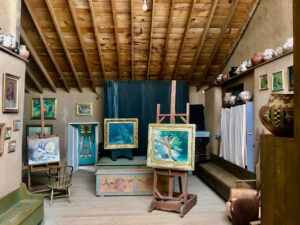
Couse-Sharp Historic Site. The former homes and studios of E.I. Couse and J.H. Sharp — two founders of the Taos Society of Artists — offer a rare glimpse into the early Taos art colony. Guided tours bring visitors through preserved studios filled with original paintings, photographs, and Native artifacts. 575-751-0369 | couse-sharp.org
Taos Art Museum at Fechin House. Set in the hand-carved adobe home of Russian artist Nicolai Fechin, this museum blends architecture and art. Visitors can see Fechin’s paintings, drawings, and sculptures, along with rotating exhibits of Taos Society of Artists and contemporary work. 575-758-2690 | taosartmuseum.org
E.L. Blumenschein Home & Museum. This adobe on Ledoux Street preserves the life and work of Ernest and Mary Blumenschein, whose arrival in 1898 sparked the Taos art colony. The house remains furnished with family belongings, art, and period décor, offering a “living museum” experience. taoshistoricmuseums.org
Contemporary Currents
The Valley. The Valley on Ledoux Street champions emerging and mid-career artists — local and national — with a focus on material practices, place-based work, and conceptual depth. The gallery typically runs solo or two-person installations lasting several weeks. thevalleytaos.com
Art by Sarah Harrison Photo by Daniel TernaArt by Sarah+Harrison Photo by Daniel Terna
OmniHum Gallery. Part gallery, part creative salon, OmniHum on Ledoux Street blends visual art, music, and performance. Winter evenings bring cozy, small-room energy with openings and art-meets-music happenings. omnihum.art
Red Finger by Sara Kollig
Atelier 111. A two-level immersive space, Atelier 111 near the Plaza hosts rotating exhibitions, talks, and occasional sound-based installations — perfect for an evening gallery stop downtown. atelier111.art
Material Portraits #6
203 Fine Art. Known for Taos Moderns and post-war abstraction, 203 Fine Art on Gusdorf Road typically mounts a “Winter Exhibition” spotlighting Modernist through contemporary work. 203fineart.com
Art by Eric Andrews
Pop-Ups & Art Markets
Winter Jamboree Arts & Crafts Fair, Nov. 29–30. A lively Thanksgiving-weekend tradition at Bataan Hall (121 Civic Plaza Dr., Taos) featuring local artisans and last-minute holiday gifts.
Taos Folk Holiday Pop-Up, Nov. 18–Dec. 24. A juried seasonal shop at Stables Galley (133 Paseo del Pueblo Norte, Taos) with ceramics, textiles, jewelry, and more. taosfolk.com
Quick Route Through Historic Taos
Start on Ledoux Street, where museums and galleries cluster: the Harwood and Blumenschein anchor the block, with OmniHum and The Valley nearby. From there, wander to Camino de la Placita for Atelier 111, then head north to the Millicent Rogers Museum, Fechin House, Couse-Sharp, and finally Hacienda de los Martinez for a full circle through Taos’ art history.
Winter in Taos brings major museum shows you can linger in for hours, intimate openings where you’ll meet the artists, and pop-up markets perfect for one-of-a-kind gifts. Bundle up, grab a cocoa, and make a loop through town — there’s fresh work on the walls all season long.
How the GI Bill shaped modern art — and found a home in Taos
By Ellen Miller-Goins
When art historian and curator MaLin Wilson-Powell curated The Albuquerque ’50s at the University of New Mexico’s Jonson Gallery in 1989, she didn’t expect it to spark a lifelong pursuit. Yet while preparing the show, she became captivated by an overlooked story: the profound impact of the GI Bill on American artists after World War II.
Cover of the show’s gallery guide.
“I thought, ‘The GI Bill was so important — I’ll go read about it,’” she recalls. “Well, there was nothing to read. No surveys, no books. So I just started collecting material, keeping files, trying to figure out who had been on the GI Bill. This exhibition — and the book — grew from that.”
That research comes full circle in Pursuit of Happiness: GI Bill in Taos, on view at the Harwood Museum of Art through March 31, 2026. The exhibition precedes the release of Wilson-Powell’s forthcoming book, The Pursuit of Happiness: American Artists, World War II, and the GI Bill, slated from the Museum of New Mexico Press.
A legacy of art, war — and opportunity
The GI Bill — officially the Servicemen’s Readjustment Act of 1944 — reshaped postwar America. It offered education, housing, and business benefits to nearly 16 million returning veterans. More than eight million used it for higher education, including the arts.
“This was the first time Americans really saw each other,” Wilson-Powell says. “Only 24 percent had graduated high school before the war, and most had never traveled more than 200 miles from where they were born. Suddenly, they were all over the world — and then, with the GI Bill, all over the country. Instead of going home to pump gas, they became veterinarians, engineers, journalists — and artists.”
Unlike WPA programs, which assigned projects, the GI Bill let veterans chart their own educational paths. That freedom fueled a generation of experimental, international, and highly mobile artists.
Taos as a nexus
While much attention has been given to New York’s postwar art scene, Pursuit of Happiness turns westward, placing Taos at the center of the story.
“Taos has always been a nexus,” Wilson-Powell explains. “Artists came to see Taos Pueblo, to study with Emil Bisttram, or to attend the Mandelman-Ribak Taos Valley Art School and the UNM Summer Field School of Art. And because of the GI Bill, many of them stayed — or came back.”
Buy War Bonds by Eva Mirabal, 1942, offset poster, 19 ¾ x 16 1/8, unframed. Courtesy of Jonathan Warm Day Coming.
The exhibition includes works by John Chamberlain, Ad Reinhardt, Lawrence Calcagno, Richard Diebenkorn, and Oli Sihvonen, alongside Taos Pueblo artist Eva Mirabal. Mirabal, a former Women’s Army Corps member, used her GI benefits to attend art school after painting Army murals. Her sharp-witted cartoon series G.I. Gertie, lampooning military bureaucracy, is also on view.
Another highlight is Janet Lippincott, a one-time Eisenhower aide and Bisttram student who pushed Southwestern art into bold abstraction, remaining under-recognized during her lifetime.
“These are not footnotes in art history,” Wilson-Powell says. “They are the story. The GI Bill created the first generation of American artists who were truly international — and many of them passed through Taos.”
More than a show
Wilson-Powell is no stranger to the Harwood. In 2016, she curated the acclaimed Mabel Dodge Luhan & Company exhibition, transforming the museum with the help of then-development director Juniper Leherissey — now Harwood’s executive director.
“She’s been behind me all the way,” Wilson-Powell says. “When I proposed that earlier show, the then-director offered one small gallery. Juniper raised all the funds and made the whole thing happen. She’s also been instrumental in bringing this current project to life.”
Oli Sihvonen’s 3 by 3, 2 Blue, Brown, and Green, 1975, acrylic on canvas, 29 1/8 x 29 3/8. Courtesy of M.A. Healy Family Foundation Purchase Fund. Collection of Harwood Museum of Art
For Pursuit of Happiness, Wilson-Powell drew from the Harwood’s collection as well as regional and national lenders. Works are grouped by school affiliations — Bisttram’s atelier, the Taos Valley Art School, Black Mountain College, and the California School of Fine Arts — underscoring the cross-pollination the GI Bill encouraged.
Programming includes a Sept. 27 curator’s talk and gallery guide. Sponsors range from New Mexico Arts and the National Endowment for the Arts to private donors.
A book long in the making
Wilson-Powell submitted her manuscript last year, but publication has been delayed by turnover at the Museum of New Mexico Press. She’s patient. “I just want it done right,” she says.
The book profiles 30 artists and places their stories within the arc of postwar American art. It’s the first survey of its kind.
“This is history we’ve taken for granted,” Wilson-Powell says. “We’ve all heard people say, ‘My dad went to college on the GI Bill and became a doctor.’ But what about the painters, the sculptors, the teachers?”
Untitled painting by Richard Diebenkorn, 1951, oil on canvas, 55 7/8 x 43. Gift of the Artist to UNM Art Department, University of New Mexico Art Museum, Albuquerque
A call for the next generation
Though her book casts a national net, Wilson-Powell hopes others will dive deeper into New Mexico’s story.
“What I’d love,” she says, “is for someone to write a book just about GI Bill artists in New Mexico. That’s still waiting to be done.”
And her dream project? “I always imagined this as a major traveling exhibition, organized by a national museum like the Whitney or the Hirshhorn,” she says. “Something that would go coast to coast, then return home — so regional museums like the Harwood could present it with work from their own collections. What we’re doing now is a step in that direction.”
Harwood Museum of Art
238 Ledoux St, Taos | 575-758-9826
harwoodmuseum.org
Why It Matters
The GI Bill didn’t just educate a generation — it reshaped American art. By funding veterans’ studies in places like Taos, it sparked bold experimentation and drew artists from around the world to Northern New Mexico. “Pursuit of Happiness: GI Bill in Taos” reveals how this postwar policy left a lasting mark on modern art — and why Taos remains a crossroads of creativity today.