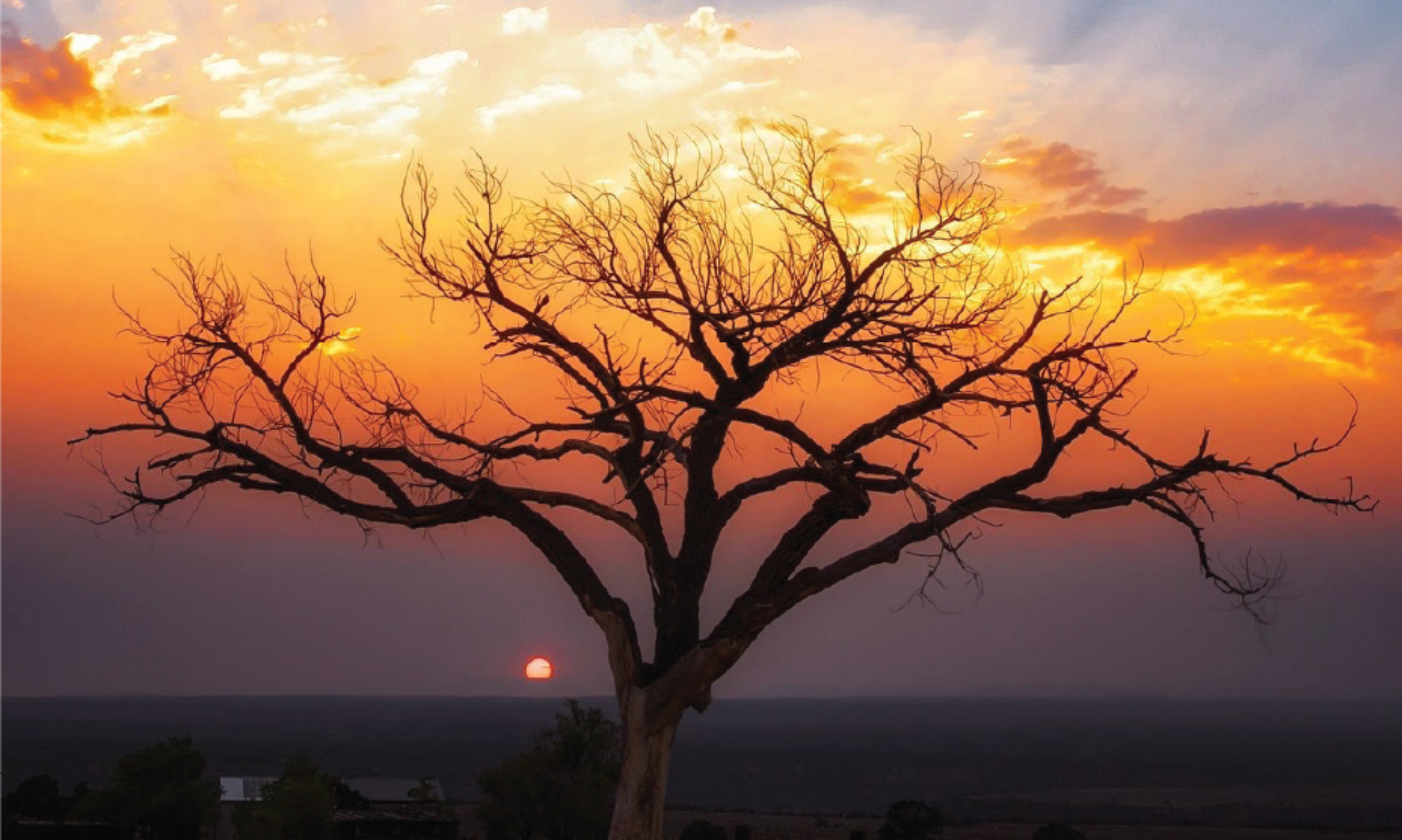

Beyond the Slopes

11 Unforgettable Winter Adventures in Northern New Mexico

By Haven Lindsey

Taos may be best known for its world-class downhill skiing, but there’s a whole world of winter fun beyond the slopes. From serene snowshoe treks to the thrill of snowmobiling, ice skating, and even ski biking, the region offers countless ways to embrace the season.

Whether you’re chasing adrenaline or searching for quiet moments in nature, here are 11 adventures that showcase Northern New Mexico’s winter magic.
1. Cross-country ski through groomed and open trails | Locations: Red River, Angel Fire

For those who love the rhythm of gliding through snow-covered landscapes, cross-country skiing is a perfect way to explore Northern New Mexico’s winter scenery at a more relaxed pace. For the more adventurous, myriad trails wind through the Carson National Forest, offering sweeping views of mountains, forests, and quiet valleys.

2. Snowshoe through quiet forest trails | Location: Taos, Taos Ski Valley, Eagle Nest

Strap on snowshoes and explore the tranquil beauty of the Carson National Forest. Trails like Gavilan, Italianos, and Yerba Canyon near Taos Ski Valley, Columbine Canyon between Questa and Red River and Amole Canyon near Taos offer serene winter landscapes perfect for a peaceful hike.

3. Glide across the ice | Taos Ski Valley & Town of Taos

Lace up your skates at the Eis Haus rink in Taos Ski Valley, where mountain views and cozy fireplaces set the scene. In town, the Taos Youth and Family Center rink is reopening after major repairs, offering public skate sessions, hockey, and figure skating. Both rinks are local favorites, where families and visitors alike can enjoy crisp winter air and smooth ice.

4. Revel in snow tubing & sledding fun | Angel Fire, Red River & Taos Ski Valley

Snow tubing brings out the kid in everyone. Angel Fire Resort features a six-lane tubing hill with lift service, while Red River’s ski area offers lively evening tubing sessions. At Taos Ski Valley’s Strawberry Hill Tubing Park, a moving carpet makes repeat runs easy. For DIY fun, locals head to Mallette Park or the Red River Nature Trail for classic sledding thrills.

5. Embark on a snowmobile adventure | Taos Ski Valley & Red River

Few things rival the exhilaration of a snowmobile ride. At Taos Ski Valley, “Big Al” Johnson’s AA Wilderness Adventures takes guests up peaks and ridgelines for scenic two-hour tours. Red River also caters to snowmobilers, with groomed trails into Trail Canyon, Greenie Peak and Midnight Meadows.

6. Try ski biking at Sipapu | Location: Sipapu

Combine the thrill of cycling with the fun of snow at rider-friendly Sipapu, which has welcomed ski bikes since the 1960s. Expect affordable tickets and easy loading on its fixed?grip lifts — great for first-timers and families. Rentals are available on site. In the Moreno Valley, ski bike rentals are offered at Eagle Nest Marina (Angel Fire welcomes ski bikes with a few caveats).

7. Ice climb frozen waterfalls | Near Questa

In winter, the canyons around Questa transform into an ice climber’s playground. Frozen waterfalls and sheer cliffs offer demanding routes best suited to seasoned adventurers with the proper gear. Mountain Skills Rock Guides does not guide ice climbs but they do offer rock climbing and backcountry ski trips in the Taos area.

8. Soak in natural hot springs | Near Taos

There’s nothing like slipping into warm mineral water while snow falls around you. Rustic pools like Black Rock and Manby Hot Springs, tucked along the Rio Grande, bubble at 80–101 degrees and provide a back-to-nature soak. For a more refined experience, Ojo Caliente Mineral Springs Resort offers historic pools, spa treatments and lodging just under an hour from Taos.

9. Hike the Gorge in winter light | Taos

The Rio Grande Gorge reveals a rare tranquility in winter, when snow highlights the canyon’s dramatic cliffs and the air is crystal clear. Trails around the Gorge Bridge and Wild Rivers Recreation Area offer sweeping views of the river far below, framed by snow-dusted mesas. With fewer visitors, it’s a peaceful way to enjoy the stark beauty of our high-desert landscape.

10. Explore Taos’ artsy side | Taos

Discover the vibrant arts scene in Taos, by visiting numerous galleries and museums, and cozy cafés serving warm libations like hot chocolate, mulled cider, and hot toddies. Stroll Ledoux Street’s historic galleries, or step into storied museums like the Harwood, Millicent Rogers and Couse-Sharp House. Many venues host special exhibits and openings through the colder months, pairing art with warm conversation.

11. Celebrate with a torchlight parade | Taos Ski Valley, Red River & Angel Fire

Few traditions capture mountain magic like a torchlight parade. On New Years Eve and other special occasions, the community comes together for magical torchlight parades and fireworks at Enchanted Circle ski areas, where skiers light up the slopes in a dazzling display. It’s a festive way to embrace the winter season.

After a day of snowshoeing, tubing, or cross-country skiing, nothing feels better than a bit of self-care. Soothe tired muscles with a massage at The Spa & Wellness Center at The Blake in Taos Ski Valley, indulge in holistic treatments at The Living Spa at El Monte Sagrado, or try the centuries-old technique of hot stone therapy at Taos Rocks. Wellness retreats and spas across Taos make it easy to recharge for your next adventure. And if you’re still undecided, visit Taos.org for an extensive guide to winter activities, events, and experiences throughout the region.

Can’t decide? Taos.org is the official tourism site for the area and offers an extensive guide to winter activities across the region. It features information on snowshoeing, snowmobiling, wildlife viewing, sleigh rides, ice fishing, ice skating and other wintertime activities available at various locations.

Outfitters & Trails

Angel Fire Nordic Center – 12 km groomed trails (XC and snowshoeing), rentals, lift access. angelfireresort.com, 575-377-4488

Enchanted Forest Cross Country Ski Area (Red River) – 30 km ski trails, 15 km snowshoe trails, dog loops, yurts, lessons and guided snowshoe tours. Info: 575-754-6112; enchantedforestxc.com

Heritage Inspirations (Amole Canyon, Peñasco) – Guided snowshoe tours with gourmet picnics. Info: 575-737-9827; heritageinspirations.com

Mountain Skills Rock Guides (Taos Ski Valley) – Backcountry ski clinics and guided tours. Info: 575-776-2222; climbingschoolusa.com

Taos Snowshoe Adventures – Half-day, full-day, full moon, and yurt trips. Info: 1-888-895-5262; snowshoetaos.com

Big Al’s Wilderness Adventures — Two-hour tours above Taos Ski Valley. Info: 575-751-6051; aataosskivalleywildernessadventures.com


Tips for the ‘Weekend Warrior’

Strategies to sharpen skills and rediscover the joy of skiing.

By Michael & Carolynne Chandler

If you’ve spent any time in ski towns, you know the type. The Weekend Warrior buys their season pass early, keeps their gear sharp, and hits the slopes at every chance. They love skiing, crave it, and dream about powder days while stuck at work. But by New Year’s, frustration sets in. No matter how many weekend runs they squeeze in, they can’t seem to get better.

They’re stuck.

It’s not for lack of passion — it’s lack of time. Skiing, like anything else, requires focused practice. And when you only get a few precious days on snow each month, it’s tempting to skip drills and just chase fun laps. For the Weekend Warrior who longs to ski smoother, faster, or more confidently, it’s easy to feel like you’re always striving but never progressing. The good news? A few small adjustments — before, during, and after ski days — can help you break through that plateau.

Preseason Warm-Up: Move Before You Groove

Whether you’re a local hoping this is the year you finally conquer Al’s Run or a visitor preparing for your first New Mexican ski trip, the best preparation happens off the mountain.

Start by getting active. Most resorts in Northern New Mexico sit above 8,000 feet, so your lungs and legs will thank you if you arrive with a little fitness. You don’t need a marathon training plan — brisk dog walks, spin classes, or pickup basketball a few times a week build solid endurance.

Mobility and balance are just as important. Air squats (20 a day, working toward 50 or more) wake up the ankles, knees, and hips. A balance board mimics the constant micro-adjustments your feet make on snow.

Gear Check: The Right Tools for the Job

Here’s a pro tip: those skis from the ’90s in your garage? Keep them as retro wall art. Modern ski technology has advanced tremendously, and outdated gear only slows progress.

If you ski occasionally, renting is the best option. Rent from a mountain shop so you can swap gear if the fit isn’t right or conditions change. Intermediates may want to spring for demo skis — the upgrade fee is worth the added performance.

Better boots = better skiing.

Most importantly, dial in your boots. A snug, supportive fit is the foundation of control and comfort. When renting, tell the shop about your feet. If you own boots, consider custom footbeds or aftermarket liners.

First Day Intentions: Warm Up Wisely

Day one is often a mix of excitement and nerves. Instead of chasing your cousin Ralph down the steepest black diamond, start with a warm-up run. Use that first hour to check your balance, ease into the rhythm, and reconnect with how skiing feels.

Think of it as setting the tone for the trip. By easing in, you’ll build confidence instead of burning out.

Level Up: Lessons and Tech

If you’re serious about improving, don’t skip ski school. Even experienced skiers develop habits that hold them back, and a good instructor will spot them instantly. Locals benefit from an occasional refresher; visitors get more from a short trip by starting with a lesson.

Love data? Try “Carv” — a digital ski coach that slips into your boots and gives real-time feedback through your phone. It’s like having a coach in your pocket.

Safety First: No ‘One Last Run’

It’s ski-town wisdom for a reason: never take “one last run.” Most injuries happen late in the day when legs are tired and focus is fading. End on a strong, safe note.

Other essentials: helmets (everyone, no excuses), hydration (altitude sneaks up on you), and sunscreen (yes, even in winter — the New Mexico sun is fierce).

Skiing as Joy

At its heart, skiing isn’t just about technique or progress. It’s about joy — the thrill of sliding down a snowy mountainside, the camaraderie of sharing a chairlift with friends, the beauty of Sangre de Cristo peaks bathed in winter sun.

So if you’re feeling stuck or worried about keeping up, remember this: skiing is meant to be fun. Improvement comes with focus, but the real reward is simply being out there.

About the Authors:

Michael Chandler is a third-generation ski instructor who began his career in 1979 and brought his passion for teaching from New Hampshire to Colorado and, ultimately, to Taos Ski Valley. After more than two decades instructing at Taos, Michael now shares his insights through writing and the integration of AI into ski coaching. Together with Carolynne, his partner both on and off the slopes, he has explored ski destinations worldwide and co-authored “Skiers Manifesto.” Carolynne is also the founder of Energy Rocks™, a functional candy supplement for athletes, reflecting their shared commitment to performance and innovation.

Stay safe this winter

Preparedness san save your life in the high country

By Cindy Brown

Winter in Taos sparkles with powdery snow and brilliant blue-sky days. The mesas and mountains invite you outdoors to backcountry ski, snowshoe, or hike. But clear mornings can quickly shift to stormy, bone-chilling afternoons.

BLYNN BELTRAN/Taos News
The Taos Search and Rescue team in the early parts of the hike to search the “missing” mushroom hunter during February 2025 training.

Last winter, several high-profile rescues near Taos Ski Valley underscored the risks. In one dramatic case, two young hikers stranded near Wheeler Peak had to be hoisted out by a National Guard Black Hawk helicopter in the middle of the night — a dangerous operation for everyone involved.

BLYNN BELTRAN/Taos News
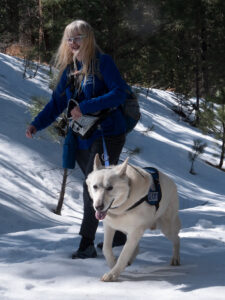
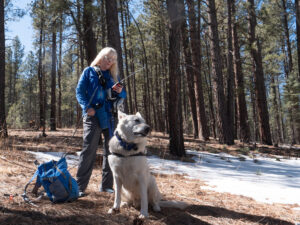
Taos Search and Rescue’s Delinda VanneBrightyn and Berger Blanc Suisse K9 AkioYodasan during the early phase of the hike to find Chad Belvill, an associate broker who went “missing” in his search for mushrooms.

Lessons from the Mountain

“Anything can happen in the blink of an eye,” explains Delinda VanneBrightyn, president of Taos Search and Rescue (TSAR) and leader of the group’s canine unit. “You could twist your ankle and it changes everything. It doesn’t require a severe injury to be dangerous.”

BLYNN BELTRAN/Taos News
Taos Search and Rescue’s Delinda VanneBrightyn and Berger Blanc Suisse K9 AkioYodasan during the early phase of the hike to find Chad Belvill, an associate broker who went “missing” in his search for mushrooms.

Visitors, especially those coming from lower elevations, often underestimate how severe winter conditions can be above 9,000 feet. “It’s stunning to me that people don’t realize the seriousness of climbing mountains in the winter,” VanneBrightyn says. “Reading rescue stories is one way to learn what can go wrong.”

BLYNN BELTRAN/Taos News
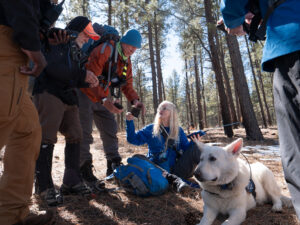
The Taos Search and Rescue team comes together as they prepare to triangulate the “missing” mushroom hunter.

She recalls two hikers in their 20s who began their trek late in the day. By the time they turned to descend, the sun had set, temperatures had plummeted, and the snow had iced over. Without proper winter gear — no crampons, ice picks, or insulating layers — they were unable to move. When rescuers finally reached them after 10 p.m., both were hypothermic, one nearly unconscious. A helicopter hoist was the only option.

BLYNN BELTRAN/Taos News
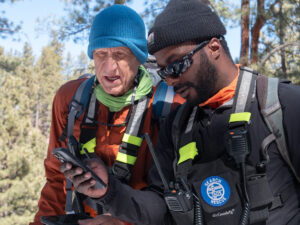
Wes Foote and Ikhide Ikhigbonoaremen set up their GPS tracker to search for the “missing” mushroom hunter.

“One way this could have been prevented is preparation,” VanneBrightyn emphasizes. “Multiple clothing layers, a waterproof outer shell, a bivy sack or sleeping bag, warming packs — all of these could make the difference.”

BLYNN BELTRAN/Taos News
Taos Search and Rescue’s Berger Blanc Suisse AkioYodasan sniffs an empty energy drink can found by the team that was considered a “clue.” A clue can be anything belonging to or left by the subject. Each clue’s reliability is rated. In this case, the can was old and more likely left by another hiker.

More rescues, more warnings

That helicopter mission wasn’t the only emergency last season. “We had at least three rescues early last winter of people who were injured, lost, or in over their heads,” says Matt Rogers, chief of the Taos Ski Valley Fire Department. “A lot of people are not prepared for the hazards of a high alpine environment.”

BLYNN BELTRAN/Taos News
Footprints on the snow can be considered a clue. A clue can be anything belonging to or left by the subject such as personal belonging. Each clue’s reliability is rated.

In one case, a hiker slid down an icy slope and became trapped on the edge of a shelf before a rope team reached him. In another, a camper between Fraser Mountain and Wheeler Peak found himself unable to light a fire or stove in heavy snowdrifts. Fortunately, he carried a personal locator beacon that allowed rescuers to pinpoint his location.

BLYNN BELTRAN/Taos News
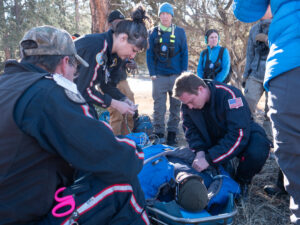
After finding the “injured” Chad Belvill, the mushroom hunter, the team applied first aid on his compound fracture, made sure he’s comfortable and packaged him for the medical airlift.

Rogers stresses the importance of timing. “Bring more equipment than you think you’ll need, and don’t wait until 5 p.m. to call for help,” he says. “Everything is harder after dark — especially a helicopter rescue. The situation has to be life and death before we’ll risk it.”

BLYNN BELTRAN/Taos News
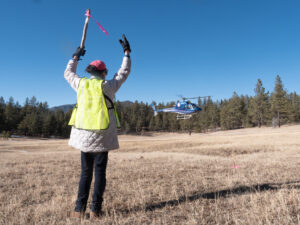
Taos Search and Rescue volunteer Jenny George helps the medivac helicopter land safely in mostly flat plains just off NM 518.

The message from rescuers is clear: don’t underestimate the mountains. A little extra preparation can make the difference between a grand adventure and a life-threatening ordeal.

BLYNN BELTRAN/Taos News
Flight paramedics, from left, Chuck Schultz, Sarah Rivali and Adrian Zabka tend to the “missing” mushroom hunter, Chad Belvill, and get him ready for the medical helicopter.

Preventing Disaster

  • Know your limits: Alpine winter travel is far more demanding than summer hiking.
  • Plan ahead: Check weather and avalanche forecasts, and return before sunset.
  • Gear up: Beyond the “Ten Essentials,” bring traction devices, poles, extra batteries, and fire-starting tools. For longer trips, add an ice pick, locator beacon, hand warmers, and a bivy sack or sleeping bag.
  • Layer wisely: Start with moisture-wicking base layers, add warmth with fleece, and top with a wind- and waterproof shell. Waterproof boots are a must.
  • Watch for hypothermia: Shivering, slurred speech, and confusion are red flags.
  • Don’t go solo: Always let someone know your plan, and consider hiring a guide or exploring with an established ski area.

— Members of TSAR, the TSV fire department, and the Carson National Forest contributed these tips.

BLYNN BELTRAN/Taos News
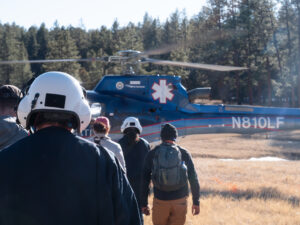
Flight paramedics and the Taos Search and Rescue volunteers approach the medical helicopter for a hot load/unload practice.

Resources

  • U.S. Forest Service: Winter safety guidance at fs.usda.gov
  • Taos Avalanche Center: Daily avalanche reports at taosavalanchecenter.org
  • American Hiking Society: “Ten Essentials” and winter tips at americanhiking.org

Arroyo Seco

The village of Arroyo Seco sits just north of Taos along NM 150 — the scenic road to Taos Ski Valley — and serves as a creative, easygoing basecamp between town and the mountains.

Its character comes through in its walkable main street, where locally owned shops, galleries and eateries reflect the area’s long-standing artistic spirit and tight-knit feel.

History remains part of the village fabric. La Santísima Trinidad Church, built prior to 1834, is listed on the State Register of Cultural Properties and stands as a reminder of Arroyo Seco’s deep roots in Northern New Mexico.
Seco Live continues to anchor the local arts scene with community-driven programming, including seasonal events like Seco Potter Fest and other workshops, concerts and gatherings throughout the summer and
fall.

Visitors are encouraged to check current listings for up- dated schedules.
With its blend of culture, history and proximity to alpine adventure, Arroyo Seco remains one of the Taos Valley’s most inviting small communities — a place where a day in the mountains ends with a relaxed evening in the village.

secolive.org

Angel Fire

Set in the wide-open Moreno Valley, Angel Fire is a high-country retreat where cool summer days and crisp mountain evenings define the experience.

Surrounded by alpine peaks and forested trails, the village blends laid-back charm with year-round adventure.

From May 15 through Nov. 1, Angel Fire Resort’s summer offerings include lift-served biking, scenic chairlift rides and zipline tours, while Monte Verde Lake offers a slower pace for paddling and fishing. Hikers and riders can explore miles of Greenbelt trails or venture onto the renowned South Boundary Trail, one of Northern New Mexico’s most scenic backcountry routes.

Summer week- ends center on community events. Balloons Over Angel Fire returns June 19–21, filling the valley with sunrise color, while the weekly Farmers Market runs Sundays, June 21 through Sept. 13. In August, Music from Angel Fire (Aug. 13–26) brings world-class performances to intimate mountain venues.

As fall approaches, golden aspens light up the valley, extending the season with quiet trails, scenic drives and the kind of easygoing mountain atmosphere that defines Angel Fire.

angelfirenm.gov

Taos Ski Valley

Adventure seekers can follow NM 150 up the scenic Rio Hondo canyon to its end, where the Village of Taos Ski Valley offers a cool, high-alpine basecamp near Wheeler Peak, the highest point in New Mexico.

At more than 9,000 feet, this walkable mountain village is an ideal place to beat the heat and launch into Northern New Mexico’s outdoor and cultural experiences.

In the warmer months, visitors can hike to Williams Lake or summit Wheeler Peak, explore Carson National Forest trails, or enjoy lift-served mountain biking and scenic chairlift rides in Kachina Basin. Guided Via Ferrata climbs on Kachina Peak offer a unique way to experience the alpine landscape. The
village also hosts lawn games, family-friendly activities and seasonal programming.

Originally a timber and mining area, Taos Ski Valley was trans- formed in the 1950s by ski pioneer Ernie Blake into a world-class destination. Today, it remains a vibrant, year-round community with lodging, dining, shopping and wellness offerings rooted in stewardship and connection to the land.

Whether seeking high-country adventure or a peaceful escape, Taos Ski Valley delivers both, with easy access to Taos’ arts, culture and cuisine just down the canyon.

taosskivalley.com

Questa

About 30 minutes north of Taos, Questa serves as the quieter northern gateway to the Enchanted Circle, where NM-38 meets NM-522 and access opens to both the Rio Grande del Norte National Monument and the high country of the Carson National Forest.

Long shaped by its mining history, Questa is known for its strong sense of community, local traditions and growing arts presence.

Outdoor recreation defines the experience here. To the west, the Rio Grande cuts a dramatic gorge through volcanic mesas, with opportunities for wildlife viewing, fishing and hiking. To the east, Cabresto and Columbine can- yons lead quickly into alpine terrain, with trailheads, campgrounds and
high-elevation lakes.

In town, the historic San Antonio de Padua Church anchors the village plaza, while a short self-guided history trail highlights local heritage. Visitors will also find casual dining, small shops and a welcoming, small-town pace.

Community events bring added energy in summer and fall. The Questa Farmers Market runs Sundays from May 24 through Oct. 4, and the Questa Art Tour returns Aug. 8–9, showcasing local artists and studios.

For more information, stop by the Questa Visitor Center at 1 NM-38.

visitquesta.com

Eagle Nest

Set along the Enchanted Circle in neighboring Colfax County, laid-back Eagle Nest draws visitors with cool summer days, big-sky views and easy access to adventure.

Photo by Elijah Rael

Perched beside Eagle Nest Lake in the Moreno Valley, it’s a great base camp for scenic drives, shopping, hiking and fishing.

The warmer months are all about the outdoors: paddling at sunrise, casting for trout and salmon, hiking local trails and mountain biking. Eagle Nest Lake State Park is a favorite for boating and birding, and visitors should plan ahead for seasonal park hours, changing conditions and current camping availability.

Back in town, Therma Drive offers gift shops, casual eats and a pint with a view at Comanche Creek Brewing Company at 5 Comanche Creek Road. Seasonal favorites include the 4th of July Parade and Fireworks, Michael Martin Murphey’s summer concert series at the Enchanted Circle Pavilion, the High Country Arts Festival on July 25–26 and Fish Fest in September. Check current events, park alerts and fire restrictions at eaglenestchamber.com/events.

visiteaglenest.org

Taos Pueblo

At the base of the Sangre de Cristo Mountains, Taos Pueblo stands as one of the oldest continuously inhabited communities in North America.

The multi-storied adobe homes — built, maintained and replastered across generations — rise in terraced tiers beside the Rio Pueblo, reflecting a way of life that has endured for more than a thousand years. Recognized as a UNESCO World Heritage Site, the Pueblo is both an architectural landmark and a living community shaped by tradition, family and place.

The present village is believed to have taken form between 1000 and 1450 A.D., with earlier settlements in the surrounding valley. Its structures, ceremonial spaces and agricultural landscape reflect deep connections to land and water, as well as to cultural practices that continue today. Central to that continuity is Blue Lake, a sacred site returned to Taos Pueblo in 1970.

Daily life continues within these historic walls. Homes are inhabited, traditions are practiced and the rhythms of the community remain tied to ceremony and season. Visitors encounter not a preserved past, but a place where history is ongoing.

Guided tours offer an overview of the culture, history and people of the region and last 20–30 minutes.

Here, you’ll find colorful shops offering Native-made, hand-crafted works from jewelry to pottery to paintings, plus foods at Dawn Butterfly Café and Tiwa Kitchen. All sales are tax-free.

taospueblo.com

Red River

Red River is a picturesque mountain town where a mile-long Main Street is lined with shops, restaurants, motels, lodges and a brewery/distillery, all set against a backdrop of cool alpine air and bright blue skies.

At 8,750 feet, the former mining community offers a refreshing escape and easy access to the outdoors.

Come for adventure and stay for the laid-back, family-friendly atmosphere. Hiking, mountain biking, horseback riding and off-road trails wind through the surrounding Carson National Forest, while nearby lakes and streams offer excellent fishing. Head to the Red River Ski & Summer Area for scenic chairlift rides, zip lines, an aerial adventure park, summer tubing and disc golf.

Summer and fall bring a full calendar of events, including the Red River Car Show, Vino in the Valley, Fourth of July Parade & Celebration, Red River Jamboree, 8750’ BBQ & Music Festival, Aspencade and Oktoberfest.

Longtime traditions continue at the Red River Community House, where families gather for activities like line dancing, bingo, movie nights and the ever-popular summer boat races.

Getting around town is easy with Red River’s free, on-demand Miners Transit system, making it simple to explore without a car.

With its mix of outdoor recreation, signature events and small-town charm, Red River remains a favorite Northern New Mexico destination, drawing visitors back year after year.

redriver.org

We love it here — you will, too

Welcome to our latest issue, one that captures the vibrant spirit of Taos — from the quiet grace of the Sangre de Cristo Mountains to the heartwarming bustle of Mantes Chow Cart. In these pages, you’ll find stories rooted in the land and lifted by art, music and memory.

We walk with llamas through alpine wilderness and learn from the wisdom of foragers searching for mushrooms beneath forest canopies. We visit the newly opened Aldo Leopold House, where conservation history breathes through timber and stone, and we share in the soulful reflections of Eliza Gilkyson as she sings us through today’s storms.

From stolen masterpieces finding their way home to the enduring light of painters Leffel and McGraw, Taos continues to inspire, surprise and stir us. With portraits that honor community and craftsmanship, and a fresh chapter in Taos hospitality at Hotel Willa, this issue is our love letter to the high desert and all of those who shape its story.

Thank you for being part of this adventure.

Ellen Miller-Goins

Magazine Editor

‘Taos Portraits II: Photos by Paul O’Connor’

60 lives, 1 town

By Ekin Balcıoğlu

“It took a complete three days to recognize this and make the move which has lasted 35 years to date … Taos hit me like a ton of bricks: I knew I was home,” Paul O’Connor writes in the introduction to “Taos Portraits II: Photos by Paul O’Connor.”

This sense of belonging — immediate yet enduring — provides the foundation for a book that delves into the lives of the people who make up this singular town. Edited by Lynne Robinson and designed by Kelly Pasholk, “Taos Portraits II” presents 60 portraits, each accompanied by essays that illuminate the personal, cultural and artistic forces shaping Taos.

“Then there are the people. First and foremost, the Indigenous Tiwa people of the Taos Pueblo. Their presence, generosity, and history are the underpinnings that hold everything together,” O’Connor continues. These words underscore the centrality of the Tiwa community to the identity of Taos, where their traditions and connection to the land have shaped the town’s rhythm and spirit. O’Connor acknowledges this with a deep respect born of decades of observation and participation.

The town itself has also been shaped by those who came and never left. “Waves of people from various periods of time, coming and going and leaving behind a certain number who never leave,” he writes. It is these individuals — artists, builders, thinkers — who have captured O’Connor’s attention, those who stayed and became part of the fabric of Taos, contributing their creativity and lives to its enduring complexity.

The art of quiet exchange

In her foreword to “Taos Portraits II,” Jina Brenneman reflects on the deeply human challenge of portraiture. “A great portrait is not only a collaboration but also a negotiation between the photographer and the sitter,” she writes. “Perhaps that push and pull is what makes taking a photographic portrait so complicated and also one of the most difficult undertakings in art.”

Brenneman’s words capture the spirit of Paul O’Connor’s black-and-white images, which unfold as intimate exchanges. His photographs have a quiet gravity to them, inviting the viewer to linger, not just on the faces but on the invisible relationships behind each frame.

The book itself mirrors this intimacy. Large in format and weighty in presence, it feels deliberate, designed to demand your attention. The portraits, rendered in black and white, strip away distractions, bringing every detail — the lines of a face, the texture of clothing, the light in a subject’s eyes — into stark relief. It’s not just a book to flip through but one to sit with, to return to, as the stories unfold across its pages. The essays that accompany the images, written by friends, family members or the subjects themselves, deepen the sense of closeness. It is a book that feels both monumental and personal, a rare balance that makes it as much an artifact as an experience.

“Today, portraiture is more important than ever,” Brenneman observes. “It creates a life-affirming, human connection that is essential, in a world becoming less and less sensitive to the human condition.”

This is the quiet power of “Taos Portraits II.” The book isn’t about grand statements but about the small, profound moments of connection between people and the places they call home. Through O’Connor’s lens, we see artists, chefs, builders and weavers not as abstractions but as individuals bound by their creativity, perseverance and deep ties to the community.

O’Connor’s photographs remind us of the richness in every face, every gesture.

“Paul reminds us of the depth of the humanity, culture, care, and love that is the nature of the diverse arts community in Taos,” Brenneman writes.

The portraits are more than static records — they are openings, moments of seeing that reveal not just the subject but the dynamic, interconnected web of life in Taos. The book’s scale, its careful pacing and its refusal to rush or overwhelm embody this ethos. It’s an object that asks to be engaged with deeply — echoing the exchanges it captures.

Stories from the community

The essays in “Taos Portraits II” provide intimate narrativesof the individuals who make up the artistic and cultural heart of Taos. Written by collaborators, friends and family, these reflections highlight the resilience, creativity and deep sense of purpose that define their lives.

Editor Lynne Robinson, who is also editor of Taos News’ Tempo magazine,ensured these pieces retained the authentic voices of their writers, many of whom were not professional authors.

“They were not bound to rote academia in regard to copy edits,” Robinson notes, emphasizing the importance of preserving the individuality and rawness of each perspective. This commitment allows the essays to mirror the diversity and authenticity of the Taos community.

Johnny Ortiz, a chef and forager, lives and works in harmony with the land, blending tradition with innovation. Andrea Rosen describes him as someone whose strength is matched only by his kindness.

“As sweet as Johnny is, he is tough! I could never be strong enough to tie a dead chicken around my dog’s neck for two days,” she writes, illustrating Ortiz’s unflinching respect for the cycles of life. Whether raising Navajo-Churro sheep, foraging wild mushrooms or cooking over open flames, Ortiz’s work is a reflection of his commitment to renewal and connection, where sustenance becomes art.

Artist and artist’s model Lyle Wright approaches his work with a profound connection to his Pueblo heritage and a keen sense of his role within it.

“I ask Lyle what he thinks about when he’s posing,” Kelly Pasholk writes. “He tells me he thinks about the future, about the legacy his generation will leave, about the generations before.” As a silversmith, Wright draws inspiration from ceremonial life and the teachings of elders, creating art that honors the depth of his cultural roots. His work bridges the historical and the contemporary, balancing the preservation of tradition with the reinvention of identity, carving out a space that is both deeply personal and universally resonant.

For Patricia Michaels, a fashion designer and artist, creation is an act of cultural preservation and forward thinking, her work rooted in both tradition and innovation.

Her daughter, Margeaux Abeyta, reflects on her mother’s approach: “Fashion is forever forward thinking, and now more than ever the roles are changing.” Michaels’ designs draw inspiration from her Pueblo heritage, translating the textures and patterns of her culture into a contemporary framework. “It is a life of balance, to preserve one’s past while progressing within a larger world of relevance,” Abeyta writes, emphasizing her mother’s ability to weave sustainability and storytelling into her work, ensuring tradition evolves while its origins are never forgotten.

J. Matthew Thomas, as Erin Elder writes, is an artist, architect, curator and the founder of The Paseo Project and the PASEO, a festival that transforms Taos into a hub of interactive art and community engagement. He also co-founded Pecha Kucha in Taos, creating a platform for local artists and thinkers to share ideas and stories. Alongside his community-building work, Thomas’s artistic practice draws from his upbringing and family traditions.

“I’m working with a pile of dress patterns from my mom,” he explains, describing his use of waxed, folded and sewn-over paper. “I think of this as queering the tools of my ancestors.” From quilted 2-D artworks to performances with inflatable cinder blocks, Thomas’ work merges the practical and conceptual, fostering spaces where creativity and community intersect.

A living portrait

“Taos Portraits II” is a celebration of the people who define Taos. Through O’Connor’s lens and the deeply personal essays, the book reveals a community bound by tradition, creativity, and resilience. The Tiwa people, whose connection to the land is woven into the town’s identity, the artists who honor heritage while forging their own paths, and the individuals who choose to stay and contribute — all are part of this living portrait.

The black-and-white images are timeless yet immediate, capturing quiet moments of humanity and connection. The essays enrich these portraits, reminding us that every face carries a story — of perseverance, history and belonging. This is not just a book to look at but one to experience, asking us to pause and truly see the people who shape this extraordinary place. Through these portraits and stories, Taos emerges not just as a place but as a shared, living expression of art and humanity.

In a world often focused on the fleeting, “Taos Portraits II” lingers, offering a powerful reminder of the beauty and strength found in community. It is a reflection of what it means to belong — to a land, to a culture and to each other.

taosportraits.com

The intelligence of painting: David A. Leffel and Sherrie McGraw

By Ekin Balcıoğlu

To encounter a painting by David A. Leffel or Sherrie McGraw is to be drawn into a stillness so precise it feels charged. Light blooms in shadow. Edges soften into air. Figures and objects emerge gradually, as if shaped by the light itself. The longer one looks, the more the structure of the painting comes into focus, not through sharp detail, but through balance, rhythm and intention. There is no decoration, no distraction. Every element serves the whole. The result is an image that holds the viewer fully, quietly and without hesitation.

Leffel has said he seeks to understand the process of painting the way a theoretical physicist seeks to understand the universe. What looks like a figure or a bowl of lemons is, in his terms, “quarks and electrons, waves and particles.” Step too close and the illusion dissolves into gesture. Step back and solidity returns, not as fact but as phenomenon. He’s painting, in his words, not people or fruit, but motion.

Leffel himself calls this process of trying to comprehend nature through painting “intelligence.” It is not a metaphor. It is his philosophy.

mcgraw 2017-07-26 multi, 7/26/17, 4:25 PM, 8C, 9000×12000 (0+0), 150%, Repro 2.2 v2, 1/30 s, R62.3, G55.5, B75.6

Born in Brooklyn in 1931, Leffel spent 11 years of his childhood confined to hospitals with a bone disease. He used that time to draw — not idly, but with intensity. It shaped everything that followed. He later studied at Parsons and Fordham, then at the Art Students League of New York with Frank Mason, where he would return to teach for 25 years. In Studio 7, under the cool north light once used by Edwin Dickinson and Frank Vincent DuMond, Leffel resurrected an endangered lineage of painting.

“David has single-handedly brought the knowledge of the old masters to the forefront of the art world today,” says his partner, painter Sherrie McGraw. “Because he studied Rembrandt, and understood him.” Indeed, Leffel is not only recognized by his peers as a painters’ painter; he is considered by many to be no less than the artistic reincarnation of Rembrandt.

leffel buffalo skull, 2/27/23, 12:57 PM, 8C, 6730×8250 (1007+2537), 150%, Repro 2.2 v2, 1/30 s, R91.9, G80.9, B102.2

But where Rembrandt’s time teemed with guilds and apprenticeships, Leffel found himself painting in a world increasingly uninterested in technique or tradition. That didn’t deter him.

“The more you invest in anything, the more you get out of it,” he says. “It takes tremendous energy and commitment.” He pursued painting not just as craft, but as a way of perceiving. “Painting is like an interlocking set of relationships: color, edges, values, thick and thin, etc. Life is the same. Everything is interrelated. All of life is like one big, interlocking relationship. Everything you do has a consequence to everything else.”

McGraw met Leffel as a student at the League, after years of searching for something deeper than the high-key Impressionist approach she’d been taught. She had known, even as a child in Oklahoma, she would become a fine artist and had already resolved not to marry or have children, determined instead to follow her own path. Her drawing practice, now recognized as among the finest of her generation, brought new awareness to the medium at a time when few were paying attention to it. Her book, “The Language of Drawing,” is now considered an essential resource for serious draftsmen.

Though McGraw and Leffel made their mark in New York, they moved to Taos in 1992, drawn by the light, the dry air and the mountains. From their studios here, they continue to work and teach, sharing decades of insight through Bright Light Fine Art. Their influence reaches far beyond the canvas: not only in how to paint, but how to see, how to think.

A collector once told Leffel, “I thought your paintings were about quiet.” Leffel replied, “They’re about light and shadow.”

In truth, they’re about both and something more. They are about a way of being in the world, attuned to the deep intelligence of form, and the still, flickering grace of things as they truly are.

Bright Light Fine Art offers online fine art drawing and painting classes for all levels with Leffel, McGraw and landscape painter Jackie Kamin.

brightlightfineart.com

Stolen Art

FBI recovers two Taos treasures missing for 40 years

By Geoffrey Plant
An exhibit at the Harwood displays missing pieces, Aspens by Victor Higgins, left, and Oklahoma Cheyenne by Joseph Henry Sharp, which were recently recovered and are currently being held by the FBI, as seen Friday (March 28). DANIEL PEARSON/Taos News

Forty years ago, art thieves targeted the Harwood Foundation, an unassuming public library on LeDoux Street with a small exhibition gallery upstairs. A woman distracted the librarian while a mustachioed man removed Victor Higgins’ “Aspens” and Joseph Henry Sharp’s “Indian Boy in Full Dress” and left with them under a long coat.

Thanksgiving that same year, a man and woman used a similar M.O. to lift Willem de Kooning’s “Woman-Ochre” from the University of Arizona Museum of Art in Tucson.

The bizarre 2017 tale surrounding the return of de Kooning’s masterpiece led investigators to the missing works by two members of the Taos Society of Artists.

All three paintings were secreted away for decades in the remote community of Cliff, New Mexico, where they hung inside an innocuous-seeming married couple’s home until 2017. Jerry Alter died in 2012. Rita Alter passed away in 2017. That summer, their nephew cleared out their home.

He engaged a Silver City estate sale company to collect the bulk of the home’s contents, donating other items to a tiny Silver City thrift shop. Removed from the back of the Alter’s bedroom door, the de Kooning went to the estate company’s resale shop, where customers soon identified it as “Woman-Ochre.” News spread like wildfire across the art world that the stolen 1955 work of abstract expressionism, now valued at $160 million, had been found.

After some twists and turns, and a lengthy restoration process, it was returned to the University of Arizona last year.

Initial speculation that the Alters stole from the art museums strictly to keep the works for themselves morphed into theories by amateur investigators that the couple were professional art thieves. They traveled internationally and domestically several times each year, living beyond their means.

A photo shown in the 2022 documentary film “The Thief Collector” shows both Taos Society of Artists paintings on a cozy-looking wall beneath which Jerry Alter is seated playing a clarinet while reading sheet music.

The Higgins and Sharp paintings were among the items donated to the humble Town and Country Garden Club Thrift Store. The nonprofit behind the store ultimately sold the works through the Scottsdale Art Auction in 2018 for $93,600 and $52,650, respectfully. The shop closed in 2021.

In 2024, true crime writer Lou Schachter did some sleuthing to uncover the stolen Taos paintings, writing in a series of articles published by Medium, “In the movie, a garden club volunteer describes the auctioned works and mentions their artists: Joseph Henry Sharp, Victor Higgins, and R.C. Gorman.”

Schachter found a 1985 Taos News story on the Harwood thefts, traced the paintings to the Scottsdale auction and notified the Harwood. In April 2024, the Harwood asked the FBI to track down the paintings, which were found by December.

Juniper Leherissey, executive director at the Harwood Museum of Art, said, “We’re hopeful they will be returned between now and September. We anticipate getting them back.”

Two empty frames representing the stolen works are on display with “Return of Taos Treasures,” an exhibition featuring Joseph Henry Sharp and Victor Higgins’ works from the Harwood’s collection on display until Sept. 7.

The Harwood Museum of Art’s permanent collection includes over 6,500 works of art, including pieces by Sharp, Higgins and the Taos Society of Artists, established July 19, 1915 by Sharp and five other artists and later joined by Higgins, who was also on the founding board of the Harwood Foundation.

Expand your horizons

This trip, take home more than souvenirs

By Ellen Miller-Goins

If you’ve taken to heart the cliche that “travel is broadening,” if you long to return home with more than tacky postcards and forgettable souvenirs, if you’re looking for opportunities to learn a new skill or improve an existing one, Northern New Mexico offers a bounty of opportunities to give your travel experience real roots.


Taos has long been a magnet for talent, and visitors have so many options for expanding their minds and creative spirits. Taos’ website lists myriad workshops for painting, photography, cooking and baking, papermaking, fiber arts, pottery, stone carving, dance, yoga, meditation, folk and herbal medicine, and more.

taos.org/explore/arts-culture/workshops

Alumni and guests attend the Taos Cultural Institute class Bringing Life to Art: The History and Legacy of Taos Artists and Their Work taught by Nicholas Myers and Jade Gutierrez on the SMU-in-Taos Campus, July 19, 2024

Taos Art School is a college-accredited institution that has been offering classes for over 30 years in Northern New Mexico. Participants come from all over the world for a week or more to study pottery, weaving, painting, drawing, photography and equine art. Students also learn about local history and culture in a campus-free setting. Discounts offered to locals.

taosartschool.org | 575-758-0350

Taos Ceramics Center offers a variety of eight-week classes, from hand-building and sculpture to wheel throwing, for adults and children all summer long. For those traveling for a short spell, Taos Ceramics Center can also accommodate pre-arranged private and small group lessons for those who would like to experience a ceramics class and create a keepsake from their visit to Taos.

taosceramics.com | 575-758-2580

Victoriano Cárdenas, a trans poet and native of Taos, is among several writers headlining SOMOS’ Taos Writers Showcase during LGBTQIA+ Pride Month in June.

Society of the Muse of the Southwest (SOMOS) holds writing workshops and readings all summer. Their Taos Summer Writers’ Conference (July 25– 27) offers three days of workshops in memoir, poetry, prose fiction and nonfiction, playwriting, and publishing. Keynote speaker Nick Flynn (writer, playwright, poet) has published 12 books and five collections of poetry, His memoir, “Another Bullshit Night in Suck City,” was made into a film starring Robert DeNiro and has been translated into 15 languages. The annual Taos Storytelling Festival takes place every October.

somostaos.org | 575-758-0081

Earthships, invented by Taos architect Michael Reynolds, are off-grid homes built from recycled materials like earth-rammed tires, cans, and bottles. See what the architecture is about in a self-guided, guided or private tour at the Visitor Center, 2 Earthship Way, Tres Piedras (1.5 miles northwest of the Rio Grande Gorge Bridge). You can also gain the skills needed to build your own through intensive four-week building sessions, online programs and more.

earthship.org | 575-613-4409

SMU-in-Taos Cultural Institute offers in-depth courses for adults on a wide-range of topics: jewelry making, fly fishing, cooking, literature, history, painting and politics. The challenge will be selecting which two one-day classes to take during the event held July 17–20.

smu.edu/alumni/events/taos-cultural-institute | 214-768-8267

Ghost Ranch, an education and retreat center 12 miles north of Abiquiu and the former home of famed artist Georgia O’Keeffe, offers workshops on a broad array of subjects: religion, art, folk arts, drama, music, health and wellness, and more. Visitor are also welcome to explore the Ruth Hall Museum of Paleontology and the Florence Hawley Ellis Museum of Anthropology, in addition to the Ghost Ranch Library.

Taos’ Best Dressed

Local fashionistas flaunt their faves

By Ellen Miller- Goins

In these playful, sunlit photo shoots that capture the spirit of Taos fashion, models Savannah Mae Cisneros and Ruthann McCarthy bring effortless charm and bold local style to life, highlighting standout looks from beloved local boutiques.

About Savannah

Savannah Mae Cisneros is a New Mexico native with deep roots in Taos, where her creative spirit and passion for fashion began to flourish. Since her teen years, Savannah has used style as a powerful form of self-expression. As a teen, she says, “I started putting outfits together and posing in my room taking pictures of myself when i was bored.” Inspired by childhood dreams of modeling, she finds joy in transforming herself like a video game character — each look telling a story. She loves experimenting with different looks and posing for photos that reflect her evolving identity. With a natural presence in front of the camera, Savannah is eager to explore opportunities in fashion, modeling and creative expression.

About Michelle’s Boutique

Michelle’s, a vibrant, woman-owned boutique located in the heart of downtown Taos, offers a carefully curated mix of clothing, jewelry and gifts. Specializing in fair-trade, handmade and locally crafted items, Michelle’s showcases one-of-a-kind treasures from both local and international artists. Founder Michelle McIntosh brings decades of fashion retail experience and a deep passion for style, individuality, and community. She’s known for creating a warm, welcoming space where every shopper feels seen and celebrated. Reflecting on the female body, Michelle says, “There are so many stores out there that only cater to one size demographic and I think that is unacceptable. Human beings are beautiful in every size they come in.”

136 Paseo del Pueblo Norte #D, Taos | 575-751-3450

About Ruthann

Taos native Ruthann McCarthy is a dedicated local business owner with deep roots in the community dating back to 1904. As part of the McCarthy family legacy, she has continued the tradition of service and stewardship through her work at Casa Benavides Inn, Legacy Café and the revitalization of McCarthy Plaza. A passionate community advocate, Ruthann founded the Taos Roundtable, a weekly gathering focused on preserving and supporting the heart of Taos. Known for her warmth, tenacity and commitment to honoring family heritage, Ruthann’s leadership continues to reflect the values instilled by generations of McCarthys who helped shape Taos.


About B.E.E.Spoke Boutique

B.E.E.Spoke Boutique and Art Café on Bent Street is a vibrant, woman-owned space offering its namesake, Basic Everyday Essentials, with European flair. Founded by Jenny Chapleau, the shop is rooted in sustainability, simplicity and style, featuring ethical brands like Nudie Jeans, local jewelry creations and upcycled flannel fashions. Inspired by Jenny’s time abroad, B.E.E.Spoke brings together organic cotton, bamboo basics and French touches like Colette mohair and linen. Beyond clothing, guests can sip locally roasted coffee or ceremonial matcha in the cozy art café, surrounded by works from Southwest artists. With community events, thoughtful gifts and a welcoming atmosphere, B.E.E.Spoke is both a stylish boutique and a warm, creative hub for locals and visitors alike.

132 Bent St, Taos | @thebeespoke132 | 971-222-8831


More Taos shops to sample:

Steppin’ Out

Steppin’ Out offers women’s shoes, clothing and accessories. Known for blending comfort with elegance, the boutique caters to those seeking stylish yet comfortable attire.

Steppin’ Out | John Dunn Shops, 120 Bent St., Ste. K, Taos | steppinout-taos.com | 575-758-4487

Clarke & Co. Menswear

A staple since 1987, Clarke & Co. specializes in contemporary men’s apparel and tailoring services, offering high-quality clothing and exceptional customer service.

Clarke & Co. Menswear | John Dunn House Shops, 120 Bent St., Ste. E | Instagram: @clarkeclothingtaos | 575-758-2696

MODA

MODA is a chic women’s boutique in Taos offering curated fashion, accessories, and gifts. As Clarke & Co.’s sister shop, it features top brands like Pendleton, Tori Richard, Kinross, and more—blending city style with mountain charm.

MODA | John Dunn Shops | 120-124 Bent St, Taos | 575-751-7255

Spotted Bear

Established in 2005, Spotted Bear is celebrated for its unique inventory and personalized customer service, making it a favored destination for both locals and visitors.

Spotted Bear | 127 Paseo del Pueblo Sur, Taos | on Facebook | 575-758-3040

Aurora Folk Arts

Aurora Folk Arts is a treasure trove of antiques, art and unique gifts, including a selection of items reflecting the rich history of the Southwest, handmade textiles and sustainable self-care products.

Aurora Folk Arts | 16 Paseo del Pueblo Norte, Ste. A, Taos | aurorafolkarts.com | 575-737-9766

Moxie Fair Trade & Handmade

Moxie offers a diverse range of fair trade and handmade items, including clothing, home decor and unique gifts, all sourced ethically to promote economic independence for artisans.

Moxie Fair Trade & Handmade | 216B Paseo del Pueblo Norte, Taos | taosmoxie.com | 575-758-1256

Hands and heart: The artists of Arroyo Seco

By Ekin Balcıoğlu

If you follow the road out of Taos north, the valley begins to shift. Chamisa and sagebrush give way to cottonwoods and curves. You pass through open fields and old fences, then arrive in Arroyo Seco, a village that doesn’t announce itself but simply receives you.

Santos y Mas

It’s small, but it holds a lot — layers of story, layers of time. It’s a place where artists and ranchers, pilgrims and potters, seekers and stayers have all left their traces in adobe and woodsmoke.

When I landed here, I didn’t yet know I was arriving home. I had come with a dream to open a gallery for clay and textiles. I couldn’t expect how quickly I’d be folded into something larger.

Old Bones: Gallery for Clay and Textiles opened December in the building where Claireworks once stood. My creative partner in clay, Max Massey, and I filled the space with ceramics meant to be touched, used and passed down. Alongside them are hand-embroidered suzanis, traditional Central Asian textiles with intricate floral motifs, Turkish silks and woven pieces carefully gathered by my parents from villages across Anatolia. We’ve set aside a small corner for hammam textiles, peshtemals and robes that carry the scent of bathhouses and slow rituals.

Twin Trees by Ekin Balcıoğlu & Max Massey

Seco is a village built by hands. Laurel Taylor at Wilde.Ink block prints linen shawls and soft blankets in her studio. Sometimes I pass her in the morning, outside with her dye pots gently steaming in the cold, carefully dipping fabric into rich hues of indigo and rust, colors slowly blooming in the soft morning air.

Wilde.Ink Shop

Just beyond us, Santos y Mas is filled with carved saints and retablos, milagros, antiques, turquoise jewelry and treasures tucked gently among shelves. Patricia Reza’s warmth fills every corner, alongside colorful little postcards painted by her young granddaughter, joyful reminders of creativity passed softly from one generation to the next.


Santos y Mas

Logan Wannamaker’s work is shaped by the high desert: its earthy tones, spaciousness and quiet sense of balance. He fires with wood, soda and salt, allowing fire and time to leave their trace. His gallery just next door includes three working studios and features his own pieces and work by his apprentices, alongside functional ware and custom dish sets.


Logan Wannamaker Pottery

Rottenstone Pottery keeps its kilns burning as a landmark for wood-fired ceramics in the Southwest. Scott Rutherford, who has worked in clay here for decades, brings together both Japanese and American folk traditions, firing in massive groundhog and anagama kilns. His gallery features the work of dozens of regional artists and has become a steady anchor for clay in the region.

Across the street, in a building lightly scented with cedar and ink, Jack Leustig’s Fine Art New Mexico houses one of the largest collections of Southwest print art in the country. Known nationally for its museum-grade prints, the gallery is guided by Jack’s thoughtful presence and the meticulous eye of studio manager Liz Mercuri, whose care ensures each piece reflects their shared dedication to quality.


Nearby is Arroyo Seco Mercantile, a cabinet of curiosities brimming with vintage jewelry, rocks and minerals, toys, games, and gifts you didn’t know you were looking for. Each shelf feels thoughtfully curated by owner Jeanie Clinton, filled with charm and a touch of playful mischief.

Arroyo Seco Mercantile

A few buildings down, Taos Wools is full of color. Joe Barry hand-dyes yarns in small batches, many from churro sheep raised nearby. His daughter helps twist skeins and pack orders. There’s a rhythm to it: family and fiber, looped together.

Joe Barry hand-dyes yarns in small batches for Taos Wools

More and more, Seco is becoming a magnet for artists, especially ceramicists. Between the kilns, studios, shared firings, and steady camaraderie, there’s a quiet sense that something is building here, a hub rooted not in trend but in tradition and deep making.

Seco isn’t curated. It isn’t polished. But it’s deeply lived-in. People come here looking for something: a bowl, a shawl, a moment. But what they find, if they’re paying attention, is a village made of intention. Of beauty shaped slowly. Of work done with care. Art here doesn’t shout. It rests in corners, hangs from pegs, sits warm in your hands.

There’s something about Seco that invites you to listen more closely: to the land, to the stories in the walls, to the shape of your own breath as it softens. And if you’re lucky, Arroyo Seco takes you in.

The return of Mantes Chow Cart

North side location reopens following extensive renovations

By Olivia Lewis

After closing a year ago for renovations, the original Mantes Chow Cart — beloved for its signature burritos piled high with chiles — reopened for business across from the Taos County Courthouse Complex.

Mante Chacon, co-owner of Mante’s Chow Cart, left, and his brother Tim Chacon pose for a portrait alongside a picture of their parents Mante and Gloria Chacon, who started Mante’s Chow Cart in 1973 as a food cart in the Taos Plaza, in the dinging room of their newly constructed north side location Saturday (Mar. 1). Mante’s Chow Cart’s new brick and mortar location is expected to open this week. DANIEL PEARSON/Taos News

For Mante Chacon Jr., who co-owns the restaurant with his family, reopening Mantes Chow Cart is about carrying on a family tradition started by his father, the late Mante Chacon Sr.

Bryan Chavez makes red chile pork tamales prior to Mante’s Chow Cart’s grand reopening for their newly constructed north side location Saturday (Mar. 1). DANIEL PEARSON/Taos News

“My motivation is to keep my dad’s legacy alive,” Chacon says. “He built so many relationships and was so important to the community.”

The Chacon family owns two Chow Cart locations on the north and south ends of town. The reopened restaurant is just north of Albright Street on Paseo del Pueblo Sur. Chacon says they closed the building because their parking lot became too congested after they lost parking space to the years-long NM 68–U.S. 64 road construction project.

In the interim, they ran a food cart similar to the bread delivery van Mante Chacon Sr. converted into a food cart in 1973. Mantes Chow Cart has been a staple of Taos, offering the likes of Susie burritos with a chile relleno and guacamole, stuffed sopapillas, cheeseburgers, chalupas and tamale pies. Over the years, the business grew into two restaurants, Comidas del Mante and the north-side Mantes Chow Cart.

Bryan Chavez, right, and Tim Chacon make red chile pork tamales prior to Mante’s Chow Cart’s grand reopening for their newly constructed north side location Saturday (Mar. 1). DANIEL PEARSON/Taos News

When the north side Mantes Chow Cart opened, it added a drive thru and carhop service that operated through the 1990s. Comidas del Mante closed, and in 2006 the family opened La Cocina, which eventually became Mantes south-side location.

“Both of my parents really came from nothing, and I always told my dad that he built an empire,” Chacon Jr. says.

Mante Chacon, co-owner of Mante’s Chow Cart, puts down a tray full of freshly made tamales prior to Mante’s Chow Cart’s grand reopening for their newly constructed north side location Saturday (Mar. 1). Mante’s Chow Cart’s new brick and mortar location is expected to open this week. DANIEL PEARSON/Taos News

Chacon Sr. passed away due to COVID-19 complications at a Colorado Springs hospital in November 2020. Chacon Sr. father was an honorary firefighter who helped raise funds for local organizations like the Taos Volunteer Fire Department. Before his family brought him back to Taos after he died, Taos County Sheriff Steve Miera offered the family a police escort starting from the county line and into town. When the family arrived, Taos community members were waiting for them.

People enjoy themselves at Mante’s Chow Cart’s newly constructed north side location during their grand reopening Tuesday (March 4). DANIEL PEARSON/Taos News

“There was a parade of cars,” Chacon says. “I think they estimated it to be around 400 cars, and people were just going in a line, and they followed the procession into town. My brother was waiting with my mom, and they joined the procession. My dad used to work at Hotel La Fonda, so we drove around the plaza. Then, we drove around here and ended up going all of the way to the other Mantes. We drove around the restaurant, and all along the way, people had signs. They were holding up signs and waving. It was such a touching thing, you know?”

He added, “We drove up to the other Mantes as well. It was during COVID, so you really couldn’t do anything. My mom sat in the car, and we parked. Everybody waited, went through the procession and gave their condolences through the drive thru.”

Mante’s Chow Cart’s newly constructed north side location as seen during their grand reopening Tuesday (March 4). DANIEL PEARSON/Taos News

Today, Chacon Jr. runs the restaurant’s north-side location with his wife, Ernestine Chacon, and brother, Tim Chacon. His sister, Louella Conway and other brother, Tim Chacon, manage the south-side location near the Dollar General Store on Paseo del Pueblo Sur.

Inside the newly renovated restaurant hang framed photographs of the Chacon family, which a family friend named Manuel Aguilar offered to print and frame. In one, Chacon’s father smiles widely beside his wife, Gloria Chacon. In another, he picks and sorts through green hatch chiles from a farm out of Hatch, New Mexico.

Bryan Chavez makes red chile pork tamales in Mante’s Chow Cart’s new north side kitchen prior to the restaurant’s grand reopening for their newly constructed north side location Saturday (Mar. 1). DANIEL PEARSON/Taos News

Because many of their dishes are made from scratch, the family prepped red Chile pork tamales and other dishes prior to reopening. They also spent time familiarizing themselves and staff with the larger kitchen. Eleven of the staff had worked at Mantes prior to the renovation.

The north side Mantes Chow Cart is open Monday through Saturday, 6:30 a.m. to 9 p.m. The menu will remain the same, with the possibility of some future additions.

Mante Chacon, co-owner of Mante’s Chow Cart, checks on how their freshly made red chile pork tamales are coming along as they cook in their kitchen’s giant kettle prior to Mante’s Chow Cart’s grand reopening for their newly constructed north side location Saturday (Mar. 1). Mante’s Chow Cart’s new brick and mortar location is expected to open this week. DANIEL PEARSON/Taos News

“It’s not all of the things that he accumulated,” Chacon says, citing the empire he says his father built. “He did well for himself, especially for not having anything, but it’s more about the relationships and the things that he was able to accomplish through them.”


Mantes Chow Cart, located just north of Albright Street on Paseo del Pueblo Sur, is open Monday through Saturday, 6:30 a.m.–9 p.m. For more information, visit manteschowcart.com or call 575-758-3632.

Weddings in Northern New Mexico

A destination like no other

By Ellen Miller-Goins

Northern New Mexico has become a premier destination for couples seeking a stunning wedding with a unique sense of place. Couples choose this area not only for its natural beauty, but for its deep cultural heritage and welcoming people.

“Many couples have a connection to this place, whether through family, past travels, or simply a love for the scenery,” says James Denio of Nest Events in Taos. “They want their wedding to reflect who they are, and Northern New Mexico allows them to showcase their love in a meaningful way.”

Some of the most beautiful weddings take place surrounded by nothing but towering aspen trees, wildflowers and snow-capped peaks. Wedding planners like Denio — and Karen Kelly of KWK Events in Red River — know not only where that perfect site is, they know if it’s possible.

“You need infrastructure,” Denio says. “If we’re going to do a wedding out on the mesa, if there’s 100 people going out there, you’re going to create a footprint. You want comforts, and you also want to showcase the land. You need vendors who can make something happen without taking away from the scenery by bringing that infrastructure in.”

Arranging for porta-potties definitely isn’t romantic. This is where a skilled wedding planner helps. Planning a wedding in a destination location requires experienced hands. Kelly says it helps to be prepared for every dream. “There’s people who book private homes and do everything at the home… and there’s two person elopements that come up here with their two best friends or their parents and get married on the bridge.”

Popular venues include several private homes with stunning vistas or riverside romance, but Kelly and Denio both also arrange weddings at popular venues like Taos Goji Eco Lodge Retreat, Hotel Luna Mystica, El Monte Sagrado, The Stakeout and the new Hotel Willa.

“It’s magnificent,” Kelly says. “They’re going to have beautiful areas for weddings.

Both Kelly and Denio say their job goes way beyond providing a service.

“If someone’s coming to me, it’s because we resonate with each other, and we have similar interests and morals and ideas about what this place actually means,” Denio says. “This place is an outward representation of what’s already happening within them.”

“It’s a fun business to be in because you’re making people happy,” Kelly says, noting how many past clients routinely bring new babies in to meet her. “You’re a part of their lives for the rest of their lives.”


Arrange your big day with a local wedding planner:

KWK Events

kwkevents.com

575-595-1971


Nest Events

nesteventsplanning.com

360-739-2398


Local ski areas offer mountain venues with in-house planning services:

Taos Ski Valley

skitaos.com/weddings

800-776-1111


Angel Fire Resort

angelfireresort.com/groups/weddings

800-633-7463


Sipapu

sipapu.ski/plan-your-trip/sipapu-weddings

575-587-2240


For more Taos-area locations, see taos.org/plan/weddings.

Eliza Gilkyson is still singing through the storms

By Haven Lindsey

Late afternoon sunlight filters through the windowpanes in Eliza Gilkyson’s century-old home near Taos, New Mexico. Her husband, Robert “Bob” Jensen, greets me at the door as the warmth from the woodstove envelops me.

Eliza Gilkyson performs at Michael Hearne’s 22nd Annual Big Barn Dance Music Festival in Kit Carson Park on Wednesday (Sept. 4). DANIEL PEARSON/Taos News

Gilkyson, the twice Grammy-nominated folksinger, enters the room wearing black, the dark fabric accentuating her cropped gray hair and bright, knowing eyes. There’s a quiet aura of peace and contentment around her. As we settle into her cozy living room — its walls adorned with colorful New Mexican tapestries and Buddhist thangkas — I become even more aware of her sense of ease. It feels like the quiet wisdom of a life led with intention.

I’m here to talk with Gilkyson about her new album, “Dark Ages.” At 74, she’s lived through other dark times and moments of rebellion. The album is filled with songs that guide today’s listeners through the political and environmental upheaval of our current reality in 2025. But it also reflects who Gilkyson is — deeply caring, with a profound love for the planet, humanity and the people in her life.

Nathan Burton/Taos News
Musician Eliza Gilkyson stands for portrait at her home in Arroyo Seco.

She’s a person with decades of lived experience and a seasoned musician who understands the difference between a powerful lyric and a powerful crescendo. Not everyone can see the shadows of political unrest and the climate crisis clearly without being consumed by the darkness. Gilkyson has found a balance, much like the way the moon casts its light on the Sangre de Cristo Mountains that rise above her home: It’s not a blinding flood of light, but a soft, steady presence.

There is simple acuity to Gilkyson, but that doesn’t mean life is simpler now.

“When I was a hippie, living gig to gig, two keys on my keychain — that was a simpler life,” she explains. “Having kids changed some of that, but even then, it was simpler than now. Back then, we had a feeling we had a future. But now, the life of our planet is threatened. We’ve come through dark times — worse than this — but we’ve never seen a climate crisis like this before.”

“Dark Ages” captures both Gilkyson’s self-described “apoplectic” mindset and the love and peace she embodies.

“My job is to make sure people continue to care,” she says of the songs on her new album. “I don’t want to live in a world where people don’t care.”

Music, she says, keeps her young.

“I full-on care, but you can’t live in a state of constant grief. We don’t know what’s coming, but I will continue to show up as a sentient being.” She describes being “gob smacked” that people voted for Project 2025. “The songs started coming out after the election, and one of them was a song I wrote more than 50 years ago. It has an innocence to it.”

The album begins, as she describes, “from a place of light,” with “Song to You” — soft, sincere and serene. The song feels like a hug. The album guides the listener through emotions that are ripe and raw now.

“Holy” is her favorite song on the album.

“There are people who rise up, who fight, and they are holy to me,” she reflects.

“Dark Ages” is, as she describes, “a scathing takedown of the current regime,” as we both note how common the word “regime” has become. “Dark Night of the Soul” is upbeat. “The song helps put things in perspective — we need to keep the lights on through the dark night of the soul.”

“Stranger” is a song about her husband of 20 years. “It’s a love song but not presumptuous. It’s personal, about the truth of not really knowing someone completely.” The album culminates with “Esta Salida del Sol,” a simple song, Gilkyson notes, “because I can only write Spanish in the present tense.”

Like the final song on an album, our conversation didn’t feel like it was ending, but rather something that lingers, waiting to be played again. The aroma of dinner on the stove, however, began to weave its way into the living room. Bob is the cook in the family, and his signature rice and greens dish, borrowed from his late friend Jim Koplin, was nearly ready. One taste, and I was an instant believer.

Later, I realized I never asked Gilkyson — who deeply feels the weight of our world — what success means to her. But as I thought about her work as a musician, her role as a wife and life partner, a mother and grandmother, I realized she had already answered the question. Gilkyson knows what success is. She’s living it.

FYI

Gilkyson joins Andrea Magee’s annual She Rises III Music Fest July 18–19 at Daleee at, 9 NM150, Taos. For more information, tickets and to join the email list, visit sherisesfest.com.